

Marine Life · Nudibranchs
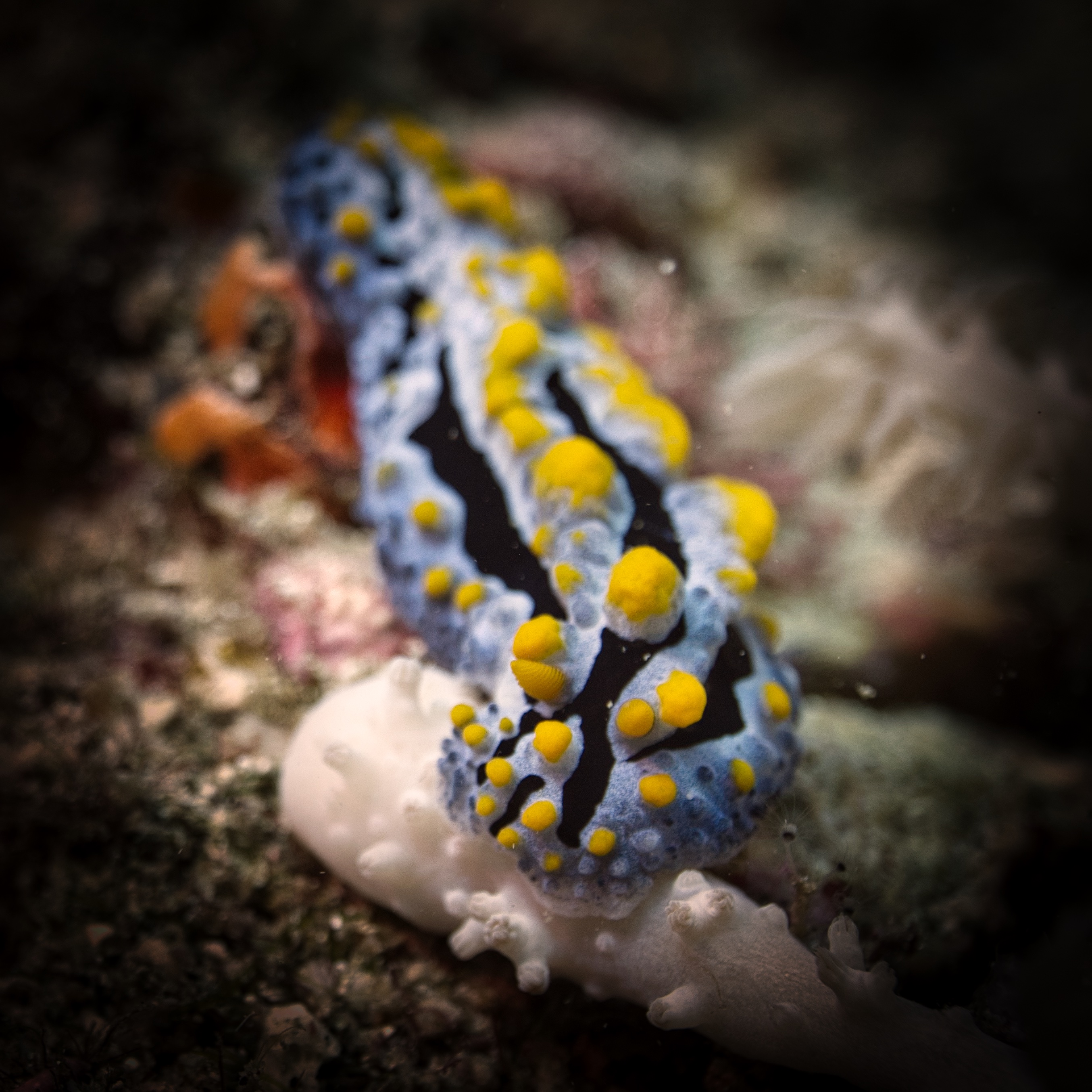
Phyllidia nudibranchs are a type of sea slug found in tropical waters worldwide. These marine creatures are known for their distinctive colors and patterns, making them a favorite subject for underwater photographers.
Characteristics

Phyllidia nudibranchs belong to the phylum Mollusca and the class Gastropoda — the same lineage as snails and slugs. They are soft-bodied creatures without a shell and are covered in prominent tubercles or ridges. These tubercles often contain toxic chemicals that serve as a defense mechanism against predators.
Habitat

Phyllidia nudibranchs are typically found in shallow tropical waters — coral reefs and rocky coastlines are their natural home. They are often spotted on sponges, which serve as a primary food source for these colorful sea slugs.
Behavior

Phyllidia nudibranchs move slowly along the ocean floor, using their tubercles to grip surfaces and resist being swept away by currents. They are carnivorous — feeding on small invertebrates and occasionally other nudibranchs. A pair of rhinophores on their head allows them to detect prey and navigate their environment.
Appearance

Phyllidia nudibranchs are known for striking colors and patterns that vary widely between species. Most have a black or dark blue body with yellow, orange, or white tubercles. Some species also feature complex stripes or banding that run along the length of their body.
Importance

Phyllidia nudibranchs are an essential part of the marine ecosystem, filling roles as both predators and prey. They help regulate populations of small invertebrates and contribute to the overall biodiversity that makes tropical reef environments so rich.





Share Your Thoughts Below