
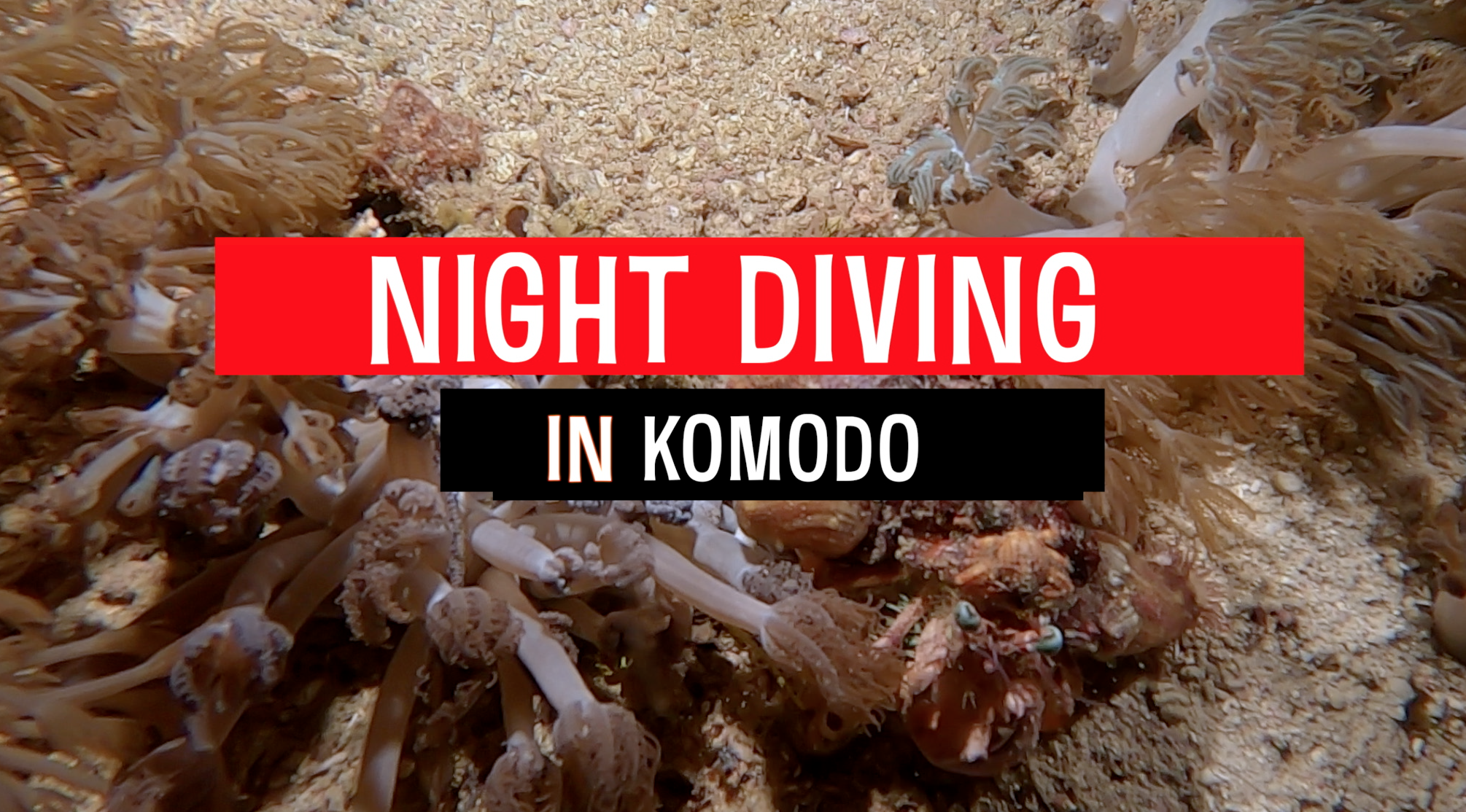
Night diving in Komodo National Park, Indonesia reveals a completely different side of the reef. Species that remain hidden during the day emerge to hunt, feed, and interact in ways that are rarely seen under daylight conditions. What looks like a calm reef during the day becomes active and unpredictable after sunset.
This dive log captures several night dives in Komodo, where the focus shifts from wide-angle reef scenes to macro life, nocturnal predators, and unusual behaviors. For divers and underwater photographers, night diving here is less about big animals and more about discovering species that are often missed entirely during daytime dives.
I spent a week aboard the Indo Aggressor, based in the Indonesian city of Labuan Bajo. During the week at sea, guests were offered daily night dives. I dived each night and saw many unique critters and interesting behavior underwater. The video below highlights some of the cool moments during our night dives.
Marine Life You Can See on a Komodo Night Dive
Night diving in Komodo is primarily about macro and behavior-focused encounters. Many of the species observed during these dives are rarely seen in daylight or behave completely differently after dark.
Common sightings include:
- Decorator Crab
- Bigfin Reef Squid
- Painted Frogfish
- Blue-Spotted Stingray
- Spotted Flathead (Crocodilefish)
- Needle Cuttlefish
- Stingray vs. Cuttlefish
- Spanish Dancer (Super Large Nudibranch)
- Komodo Reef Octopus
- White-Spotted Hermit Crab
- Whitemargin Stargazer
- Broadclub Cuttlefish
- Lacy Scorpionfish (Rhinopias)
- Bigfin Reef Squid
Some dives may also reveal nudibranchs, flatworms, and other small invertebrates moving across the reef. The slower pace of night diving makes it ideal for spotting these smaller subjects.
Dive Conditions and Safety Considerations
Night diving requires a different mindset than daytime diving, especially in a place like Komodo. While currents are generally reduced at night, divers still need to be aware of changing conditions, entry points, and navigation limits.
Key conditions:
- Depths: 20–60 feet (6–18 meters)
- Water temperature: 79–84°F (26–29°C)
- Visibility: 30–50 feet (9–15 meters)
- Current: Mild to moderate depending on site
Divers should carry at least one primary dive light and a backup. Maintaining close proximity to the guide is critical, as visibility is limited to your torch’s beam. Good buoyancy control is especially important to avoid disturbing marine life or damaging coral.
Best Time of Year for Night Diving in Komodo
Night diving is possible year-round in Komodo National Park, but overall conditions vary by season.
- April to November (Dry Season):
Best overall conditions with calmer seas and more predictable diving - December to March (Wet Season):
Increased plankton and nutrients can improve marine life activity, but surface conditions may be less stable
Because night dives are typically conducted in sheltered areas, they are less affected by wind and waves than daytime dives. This makes them a reliable option even when daytime conditions are marginal.
I previously posted a few exciting moments during the entire dive trip here. Also, I posted a few photographs from the trip here. In a few weeks, I will post my travel and liveaboard trip report.
I find night dives interesting because you can see animals that you don’t see during the day. Below is a video playlist that hosts a few more night dives from around the world. There are a few interesting clips from Roatan, St. Kitts, Raja Ampat, and the Bahamas.
Here’s my underwater camera set-up.
FAQs
What can you see on a night dive in Komodo National Park, Indonesia?
Night dives in Komodo commonly reveal octopus, moray eels, decorator crabs, boxer crabs, nudibranchs, cuttlefish, and hunting lionfish, many of which are rarely active during the day.
Is night diving in Komodo safe for recreational divers?
Yes, most night dives in Komodo are conducted in protected, shallow sites with mild currents, typically between 30 and 80 feet, making them suitable for divers with basic experience and good buoyancy control.
When is the best time to do night diving in Komodo?
Night diving is available year-round, but April through November offers the most stable conditions, while December through March may provide increased marine life activity due to higher nutrient levels.




Share Your Thoughts Below