
Dive Site Overview: Molinere Bay, Grenada
The Molinere Underwater Sculpture Park in Grenada is far more than a simple art installation; it is a living, breathing artificial reef system that has redefined the intersection of art and marine conservation. Nestled within the Molinere Beauséjour Marine Protected Area, this site features over 75 permanent sculptures. These works were pioneered by British artist Jason deCaires Taylor, whose vision was to draw divers away from fragile natural reefs while providing a substrate for new coral growth.
Beyond the unique allure of the sculpture park, Grenada scuba diving offers a staggering multitude of opportunities. The “Spice Isle” is home to everything from luxurious, pristine coral reefs teeming with life to hauntingly beautiful natural shipwrecks—most notably the “Titanic of the Caribbean,” the Bianca C, which has rested on the seafloor since 1961. Whether you are hunting for macro subjects or wide-angle wreck shots, the diversity here is world-class.
Quick Facts: Molinere Sculpture Park
- Location: Molinere Bay, West Coast (10-minute boat ride from St. George’s)
- Depth: 3m to 8m (10ft to 26ft) — Perfect for long bottom times and light penetration
- Visibility: 10m to 30m (30ft to 100ft) depending on seasonal runoff
- Conditions: Mild currents; ideal for photographers managing heavy camera rigs
- Best Time: December through May for peak water clarity
Iconic Sculptures & Marine Life Colonization
The sculptures are crafted from specialized pH-neutral cement, engineered to encourage coral polyps to attach and thrive. Over the last two decades, these figures have been transformed by the sea. They are now adorned with fire coral, vibrant sponges, and flowing sea fans. This evolution makes the site a “repeat dive” destination, as the “faces” of the park change with every passing season of growth.
Still Life Tableau
This installation creates a surreal domestic scene on the ocean floor, featuring an underwater table set with vases and bowls. From a cinematographer’s perspective, the composition is striking when a diver enters the frame, providing a sense of scale and a “human vs. nature” narrative. It challenges our perception of what belongs in the deep and serves as a fantastic subject for playing with negative space.

The Vicissitudes
Perhaps the most globally recognized piece in the park, The Vicissitudes features a circle of 26 life-sized children holding hands. This piece is a powerful tribute to human connection and the cycle of life. As a photographer, I find this piece particularly evocative during the midday sun, when light rays pierce the shallow water and cast moving shadows across the children’s faces, which are now heavily encrusted with marine life.

The Lost Correspondent
Often referred to as the “Newspaper Man,” The Lost Correspondent is a masterpiece of detail, depicting a man at a desk covered in historical newspaper clippings. It is a prime target for macro photography, especially when focusing on the intricate coral growth on the typewriter keys or the delicate tunicates that have claimed the man’s jacket. This sculpture serves as a poignant reminder of how human artifacts become seamlessly integrated into the natural world.

Underwater Photography Tips
- Manage Your Buoyancy: In 15 feet of water, even a slight surge can push you into a sculpture or kick up silt. Stay “heavy” but controlled to keep the water crystal clear for your shots.
- Work the Natural Light: You don’t always need strobes here. The shallow depth preserves much of the red spectrum. Try shooting 1/3 stop underexposed to bring out the deep blues and the “moody” textures of the cement.
- Low-Angle Perspective: To give these life-sized statues a monumental, heroic feel, get your lens as low to the sand as possible and shoot upward toward the surface.
- Focus on Detail: Look for the Christmas tree worms and blennies that live in the “pores” of the statues. These small details tell the story of the reef’s rebirth.
The Graceful Prayer
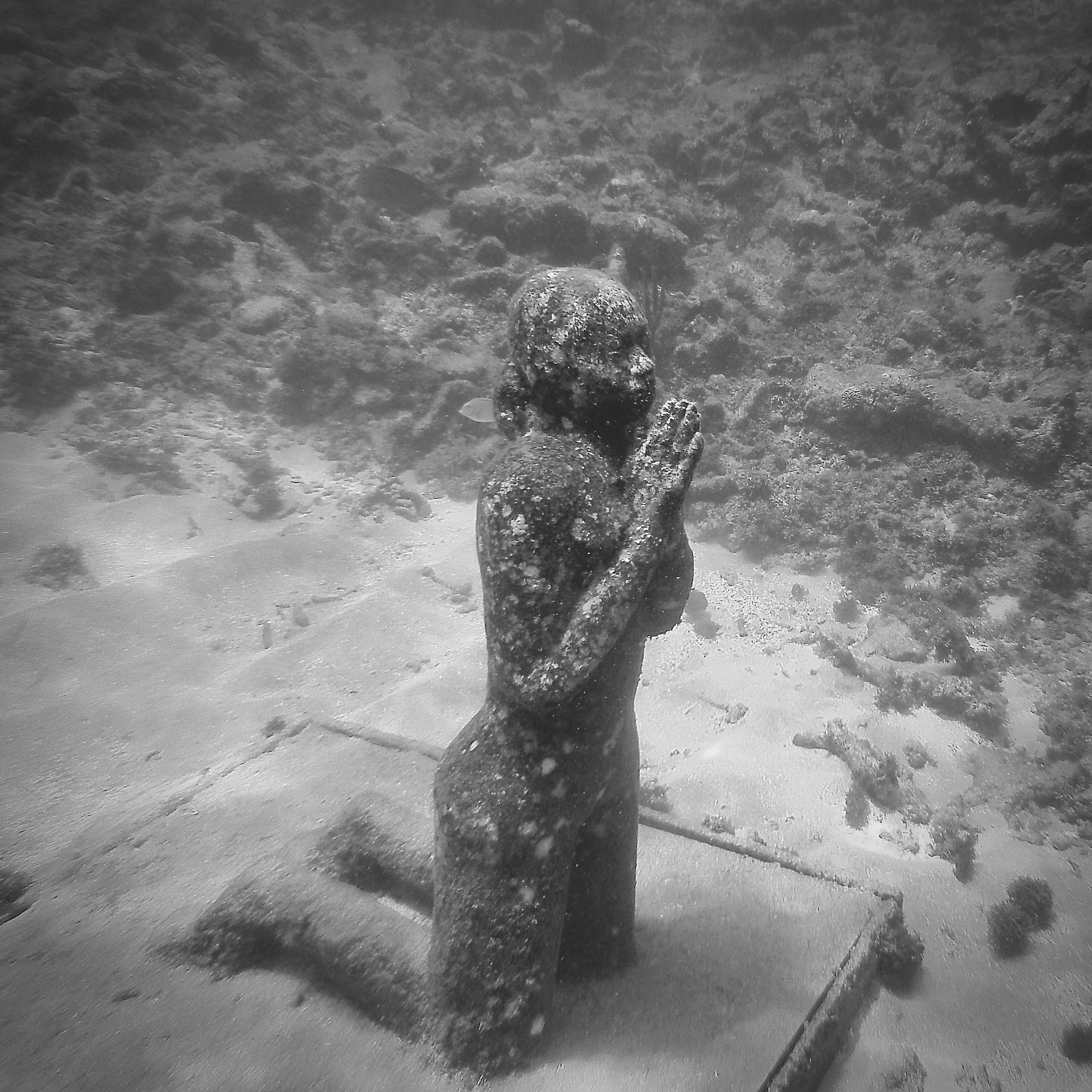
One of the most poignant sculptures in the park, The Graceful Prayer depicts a woman kneeling in devotion. This figure offers a haunting silhouette that works beautifully when shot against the sunlight, or “shooting into the big blue”. Over time, corals and sponges have adorned her form, making her a sanctuary for marine life and a powerful reminder of our connection to the ocean.




Share Your Thoughts Below