
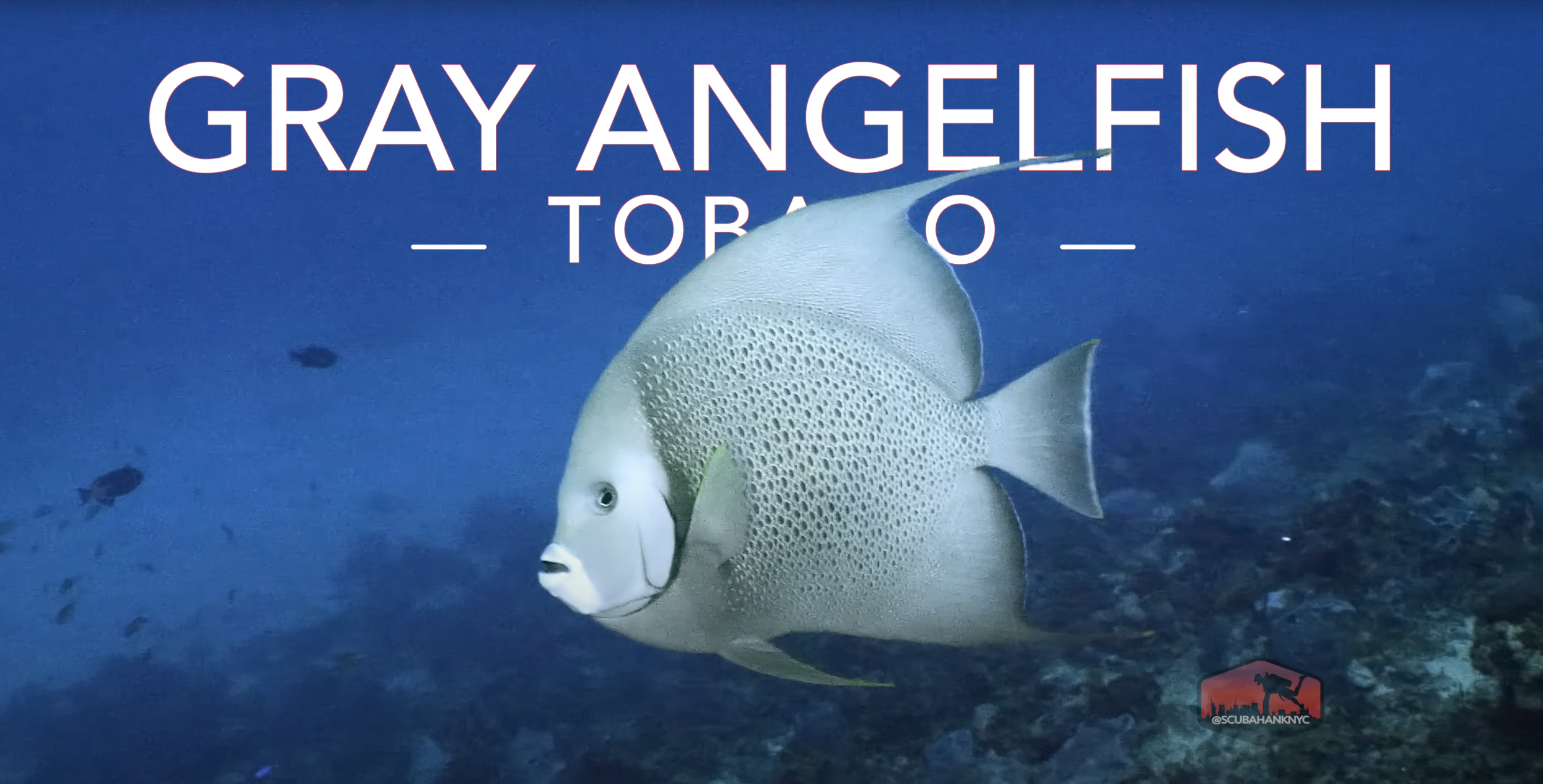
A Gray Angelfish drifts through Tobago’s nutrient-rich, clear water and glides directly toward my camera for a brief, curious moment. Shot off Speyside, this peaceful encounter captures the calm side of Caribbean reef life.
About the Gray Angelfish (Pomacanthus arcuatus)
The Gray Angelfish is a distinctive reef fish with a thin, disc-shaped body and small mouth containing comb-like teeth. These elegant fish are among the Caribbean’s most recognizable reef inhabitants, reaching up to 24 inches (60 cm) in length and weighing as much as 1.8 kg.
Adults display pale grayish coloring covered in black spots, with a plain pale gray head and distinctive white mouth. The interior of their pectoral fins shows a vibrant yellow coloration. One of their most striking features is the elongated streamers that often develop on their dorsal and anal fins as they mature.
Habitat & Distribution
Gray angelfish inhabit the Western Atlantic Ocean from New York to Rio de Janeiro, including all of the Caribbean Sea and the Gulf of Mexico. They’re typically found at depths between 7-98 feet (2-30 meters) around coral and rocky reefs, where the structure provides shelter during nighttime hours when they rest.
These reef fish are commonly observed in pairs and have been documented forming long-term monogamous breeding relationships. This pair-bonding behavior makes them a fascinating subject for divers and marine biologists studying reef fish social structures.
Diet & Feeding Behavior
Gray angelfish are diurnal species that hide in the reef during the night, primarily feeding on sponges during daylight hours. However, their diet is quite varied and also includes tunicates, algae, zoantharians, gorgonians, hydroids, bryozoans, and even seagrasses. This dietary flexibility helps them thrive across different reef environments throughout the Caribbean.
Juvenile gray angelfish serve as cleaner fish, establishing cleaning stations that are visited by various larger fishes seeking parasite removal. This symbiotic behavior benefits both the juveniles, who gain nutrition, and the larger fish, who receive grooming services.
Juvenile vs. Adult Coloration
Juvenile gray angelfish are nearly black with five yellow bands – three on the head and two on the body. The yellow band on the head runs through the mouth to the chin with a distinctive yellow ring around the lips. Their square tail has a white or transparent margin with an irregular black blotch.
As juveniles mature into adults, they undergo a dramatic transformation, losing their bright yellow bands to develop the uniform gray to grayish-brown coloration typical of adults. Each scale develops a large gray or brown spot in the center with pale gray edges, creating the spotted pattern characteristic of mature specimens.
Behavior & Interaction with Divers
Gray angelfish are curious and brave, making them popular subjects for reef divers and underwater photographers who appreciate their willingness to closely approach. This natural curiosity, combined with their elegant swimming style and striking appearance, makes encounters with gray angelfish memorable highlights of Caribbean reef dives – as captured in this video from Tobago’s pristine waters.
Conservation Status
The gray angelfish is currently classified as Least Concern by the IUCN. While they are occasionally caught for food and the aquarium trade, their populations remain stable throughout their range. They have a relatively low population doubling time between 4.5-14 years, and they reproduce through external fertilization of eggs in open water.
Want to Explore Tobago’s Reefs?
Discover more incredible underwater encounters and dive adventures
Watch More on YouTube


Leave a Reply to FlowerpoetCancel reply