
Gemini said
Recognized widely as the “Critter Capital of the Caribbean,” St. Vincent and the Grenadines (SVG) stands as a premier destination for divers who prioritize biodiversity and unique topography. Unlike the more traditional reef profiles found elsewhere in the region, SVG is defined by its volcanic origin, offering a technical mix of black sand slopes, dramatic walls, and healthy coral systems.
The underwater landscape provides two distinct environments. The offshore reefs are characterized by vibrant hard and soft coral structures that support consistent schools of tropical fish. In contrast, the nearshore rubble zones and volcanic sand patches host a concentration of rare macro life—including frogfish, seahorses, and various species of shrimp and eels—that rivals world-class muck diving sites in Indonesia or the Philippines.
For the underwater cinematographer or enthusiast, St. Vincent rewards a methodical approach. The combination of high-density marine life and the stark contrast of the volcanic backdrop makes it a uniquely productive environment for those who slow down to document the details of the reef.
(Click on an image to enlarge)


Dive Conditions in St. Vincent
The diving around St. Vincent primarily features boat-based exploration of volcanic reef slopes. Because the island’s leeward coast is protected, many of the most productive macro sites are located within a 5- to 15-minute boat ride from the dock.
Standard Operating Conditions:
- Depths: Typical profiles range from 12–30 meters (40–100 feet), though many world-class macro subjects are found in the shallows above 15 meters.
- Water Temperature: Maintains a consistent 26–28°C (79–82°F). A 3mm full suit or vest is standard year-round.
- Visibility: Regularly averages 20–30 meters (65–100 feet). Due to the heavy nature of the volcanic “black sand,” sediment settles quickly, maintaining clarity even in muck-diving areas.
- Currents: Generally mild to negligible along the sheltered coast, though certain points and offshore pinnacles can experience moderate drift.
Topography & Experience:
Most sites are characterized by a gradual reef slope that transitions into deeper coral formations and basalt rocky ledges. This “stepped” architecture is ideal for multi-level diving, allowing intermediate divers to enjoy the reef while providing the depth and bottom time required for professional underwater photography and cinematography.
Creature Spotlight:
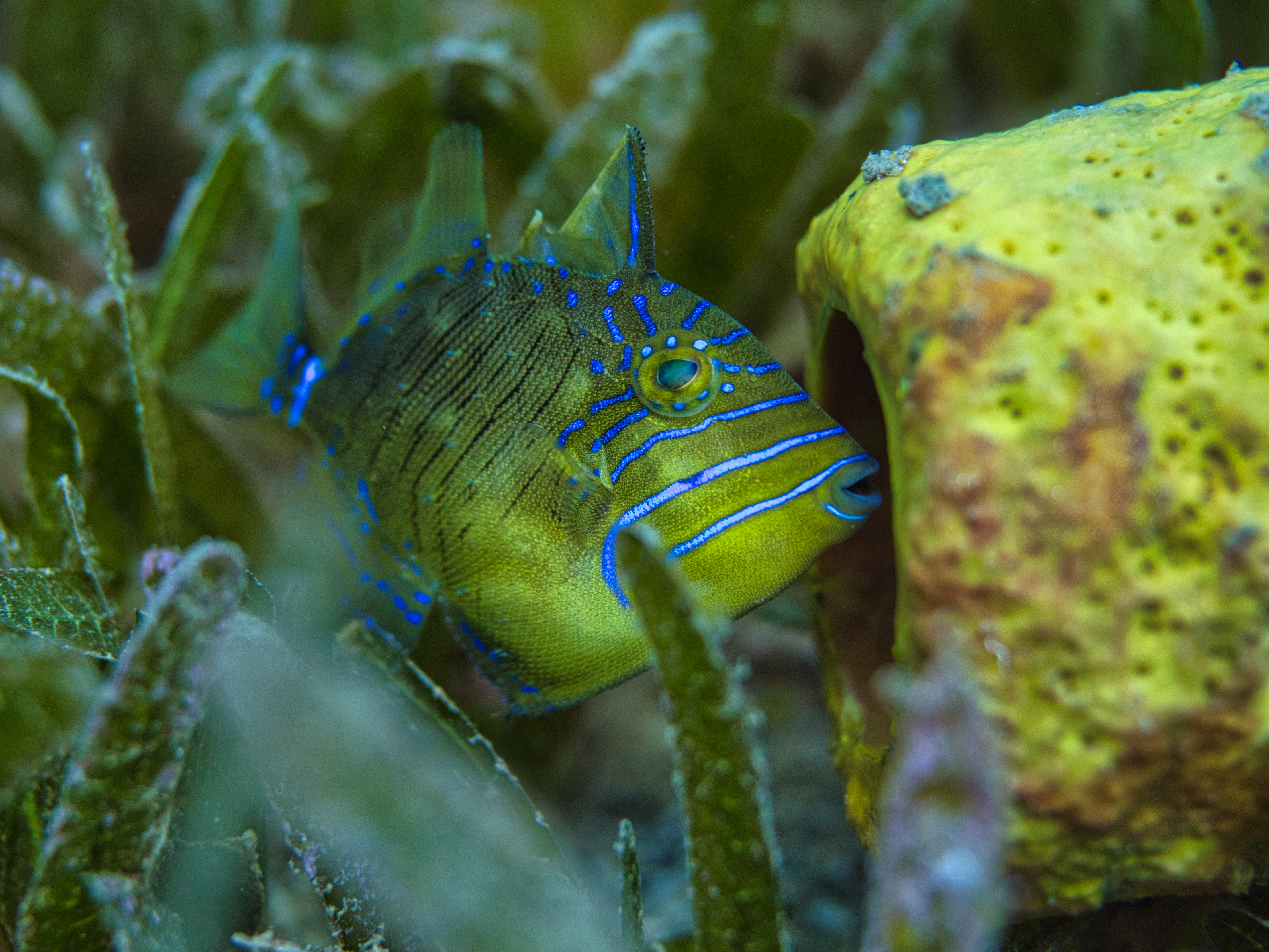
The smooth trunkfish (Lactophrys triqueter) is a small, box-shaped fish native to the tropical waters of the western Atlantic Ocean, including the Caribbean Sea and the Gulf of Mexico. As a member of the boxfish family, it stands out with its rigid, armor-like body and distinctive angular shape. Adult smooth trunkfish typically display a dark brown or blackish base color covered in small white spots. Juveniles look dramatically different, often appearing bright yellow with dark markings, which makes them especially eye-catching when spotted on Caribbean reefs.


Additionally, the many sunken shipwrecks and volcanic formations in the area add to the diverse range of dive sites available.


Overall, St. Vincent and the Grenadines is considered one of the top scuba diving destinations in the Caribbean.
FAQs
Is St. Vincent good for scuba diving?
Yes. St. Vincent and the Grenadines offers excellent scuba diving, particularly for macro photography. Divers can expect healthy coral reefs, volcanic topography, and abundant marine life including octopus, nudibranchs, shrimp, and sea turtles.
What marine life can you see while diving in St. Vincent?
Divers frequently encounter Caribbean reef octopus, nudibranchs, seahorses, cleaner shrimp, southern stingrays, and sea turtles. The island is known for its exceptional macro life and critter‑focused diving.
What are the typical dive conditions in St. Vincent?
Most dives occur at depths between 12 and 30 meters (40–100 feet) with water temperatures around 26–28°C (79–82°F). Visibility usually ranges from 15–25 meters, with generally mild currents.
Logbook Entries From the Caribbean
-

Dive Guides Make Fish Identification Easy
-

World Octopus Day and Beyond — Encounters from St. Vincent to Thailand
-

Saint Vincent Seagrass




Share Your Thoughts Below