
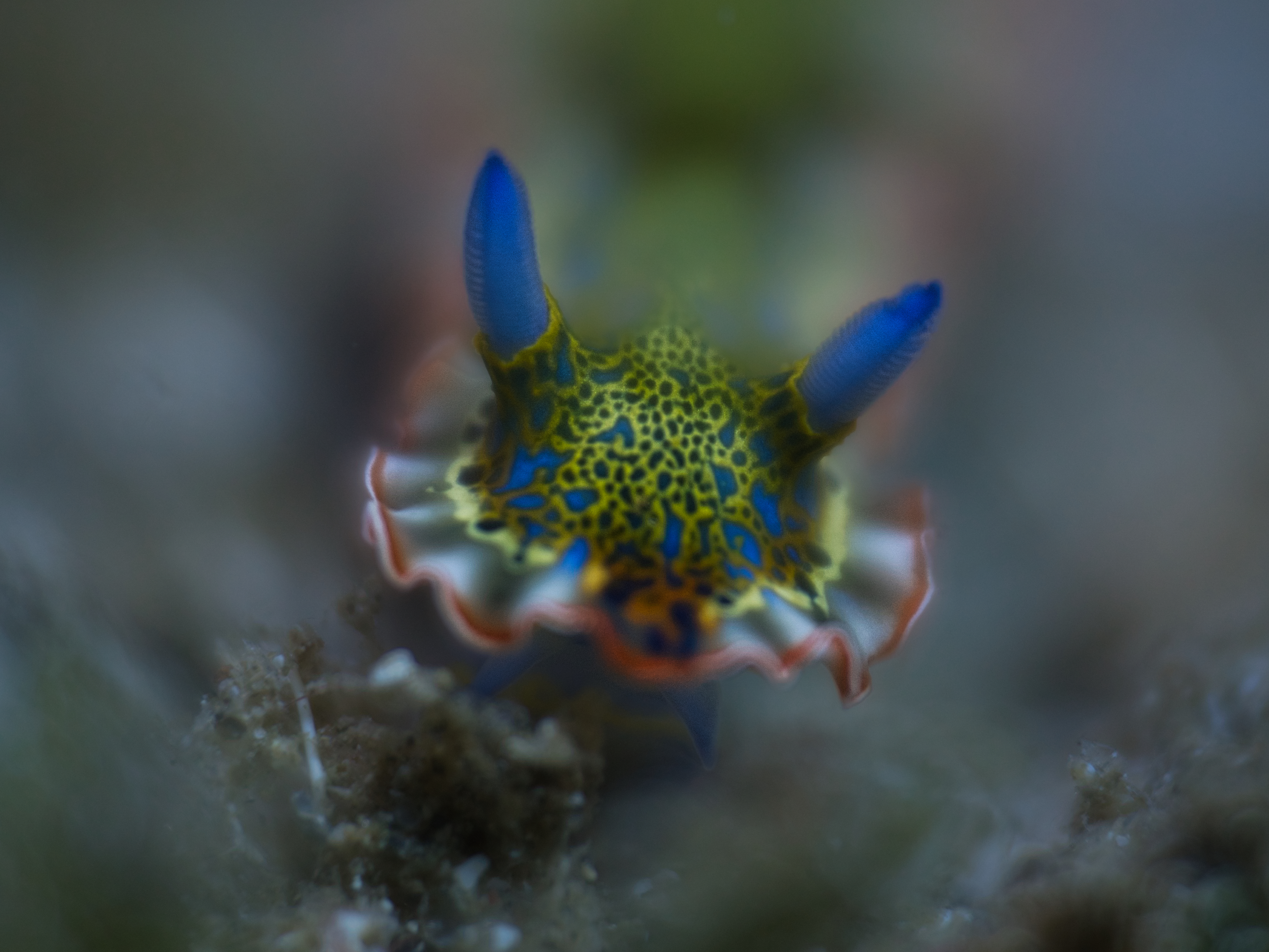
If you are fortunate enough to spot this radiant creature slowly making its way across a Caribbean reef, you are looking at the Gold-crowned Sea Goddess. Easily identifiable by its namesake royal plume, this stunning nudibranch adds a brilliant splash of blue and gold to the ocean floor.
A True Dorid Nudibranch: The Gold-crowned Sea Goddess (Felimare acriba) relies on its vibrant coloration as a warning to predators. The striking golden crown at its posterior is actually a specialized gill plume used for respiration, which can be retracted quickly if the sea slug feels threatened by approaching divers or predators.
Despite its delicate appearance, the Gold-crowned Sea Goddess (Felimare acriba) is a highly specialized marine gastropod. As a dorid nudibranch, it is characterized by the distinct, tufted gill plume on its back. This “golden crown” functions as the animal’s respiratory organ, extracting oxygen from the water currents sweeping over the reef.
The striking contrast of its deep blue body and intricate yellow lines is a textbook example of aposematism. In the nudibranch world, such vibrant, high-contrast coloration serves as a visible warning to potential predators that the animal is highly unpalatable or toxic. They acquire these defensive chemicals directly through their diet, happily grazing on sea sponges that would be deadly to other marine life.
Finding one of these macro treasures requires a keen eye and slow, deliberate movement. They tend to favor rocky substrates where their favorite sponges grow. Spotting this particular individual off the coast of St. Vincent—often hailed as the ‘Critter Capital of the Caribbean’—is a fantastic reminder of the incredible, tiny biodiversity that thrives in these tropical waters if you take the time to look closely.


Leave a Reply to FlowerpoetCancel reply