
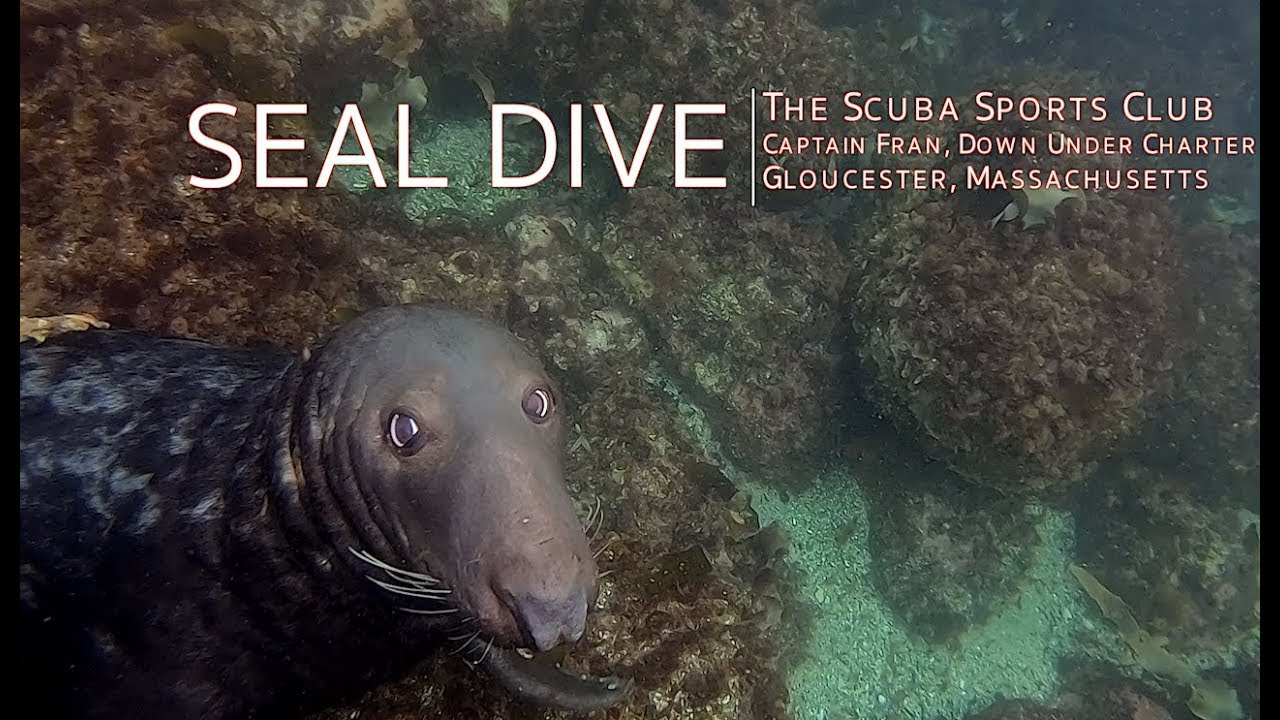
Scuba diving with seals in Gloucester, Massachusetts is one of the most unique cold-water adventures within easy reach of New York City. Just a 3–4 hour drive from NYC, Cape Ann offers dramatic rocky reefs, rich marine life, and the chance to experience curious gray seals and harbor seals up close in their natural environment.
Gloucester sits on Cape Ann in Essex County and has a long history as a fishing and maritime town, but it is also a fantastic destination for cold-water scuba diving. I joined members from the Scuba Sports Club of Westchester for a weekend of New England diving to see what northeast cold-water diving is really like and to find out why so many local divers are hooked on seal dives here.
For this trip, we chartered the Down Under with Captain Fran Linnehan, a local captain who knows the Gloucester dive sites extremely well. Tanks were rented through Scuba New York since the charter doesn’t supply them, which is typical for many New England dive boats. Captain Fran took us to two of the best Massachusetts seal dive sites where seals are known to congregate in September, including the famous Dry Salvages.
This was my first northeast dive, and the main draw was the chance to scuba dive with seals in the wild rather than in a controlled or captive environment. The experience did not disappoint. The seals were incredibly curious and playful, circling the group, checking us out from a distance, and then coming right up to inspect our fins, cameras, and bubbles.
If you want good interactions when diving with seals, patience is key. Stay low, move slowly, and avoid chasing them. The best encounters happened when I stayed still, gave them space, and let the seals decide when to approach. Over the course of both dives they returned again and again, clearly comfortable and in control of the interaction.
Water temperature, exposure protection, and conditions
Even though Gloucester is relatively close to New York City, you are definitely in cold-water diving territory here. On this trip the water temperature was around 63°F (17°C). I dove in a 7mm wetsuit with a 5/3 hooded vest and 5mm gloves, which was adequate for my core, but my hands and feet were very cold by the end of the second dive. For future Massachusetts seal dives, I would strongly recommend a drysuit with proper thermal protection, especially if you plan to do multiple dives per day or visit later in the season when water temperatures drop.
Visibility on this particular trip was excellent for New England, which made a huge difference for both the experience and the footage. Conditions can vary with weather, tides, and recent storms, so it’s important to dive with a local operator who knows how to pick the right sites and timing for the best seal encounters and safest diving.
Beyond the seals: lobsters, crabs, and New England marine life
While the seals were the stars of the show, the sea floor around Gloucester is packed with marine life. American lobsters and Jonah crabs were everywhere, tucked under rocks, crawling across the bottom, and occasionally out in the open. The rocky terrain, kelp, and boulders give the area a very different feel compared to the tropical reefs many divers are used to, and it’s a great introduction to cold-water scuba diving in the northeast.
As New Yorkers, we weren’t permitted to collect lobsters or crabs without a Massachusetts license, and in my case it didn’t matter anyway since I don’t eat seafood. For me, the focus was on observing and filming behavior, enjoying the density of life on the bottom, and appreciating how different New England diving feels compared to the tropics.
Underwater video setup for Massachusetts seal diving
All of the underwater footage on this dive was shot with a GoPro Hero 6 Black using a Backscatter Green Water filter and two SeaLife Sea Dragon video lights rated at 2500 lumens each. The combination of strong video lights and good ambient visibility helped bring out the colors of the seals, kelp, and rocky bottom, which can otherwise look very green and flat in cold water.
If you’re planning your own seal diving trip to Massachusetts, I recommend bringing a wide-angle setup or action camera, solid lighting, and enough battery and memory for multiple dives. Seals move quickly and unpredictably, so continuous recording and wide coverage give you the best chance of capturing those close passes and playful moments.
Planning your own seal dive in Gloucester
For New York City–based divers, Gloucester is a realistic long-weekend destination that offers something completely different from local quarry or Caribbean trips. You get true cold-water scuba diving, abundant marine life, and the rare opportunity to scuba dive with wild seals in Massachusetts without needing to fly. I’m already looking forward to returning; Captain Fran mentioned several nearby sites known for nudibranchs and other macro life, which I plan to explore on a future trip—next time in a drysuit.




Share Your Thoughts Below