
Resort & Accommodation
Golden Rock Dive & Nature Resort is the first and only upscale resort on St. Eustatius, a small Dutch Caribbean island locally known as Statia. The property spans 40 acres at the base of the Quill, the island’s dormant volcano, with unobstructed ocean views in one direction and the mountain rising in the other. Statia Divers, the in-house PADI dive center, operates from the resort grounds.
Getting to Statia requires a connection through a neighboring island. Most travelers fly into St. Maarten or St. Kitts and continue by small plane, ferry, or speedboat. I flew into St. Kitts (SKB) and took a speedboat transfer with Paradise Sun Charters, which Golden Rock partners with directly. The resort arranged airport pickup and transport to Port Zante, where Paradise Sun buffers departure time to accommodate multiple flight arrivals. The boat arrived and we boarded on schedule. Paradise Sun provides refreshments during the crossing, which takes roughly an hour. I chose the speedboat over the flight because I was traveling with heavy camera gear and preferred to keep it with me rather than check it on a small aircraft.
On arrival in Statia, you clear customs at the dock in Lower Town and are transferred to the resort in about five minutes. The process was seamless — no waiting, no confusion.
The property itself is large and well-appointed. There are two pools, a spa, a gym, two restaurants, a greenhouse that supplies the kitchens, and a full dive facility including a training lagoon. For downtime, there is a basketball court, tennis courts, a soccer field, and mini golf. The grounds are landscaped with over 130,000 plants and trees, and quiet areas are easy to find throughout the property.
I stayed in a one-bedroom cottage, which was very comfortable. The layout separates the living area from the bedroom, which worked well as a camera station for cleaning and charging equipment between dives. The bathroom was large and spacious, and the private porch was a nice spot to sit in the evenings. The cottage felt more like a small home than a hotel room.
The resort is spread out enough that they run a shuttle between the rooms, restaurants, and the main gate, but everything is walkable for anyone reasonably mobile. It never felt inconvenient.
The resort has two dining options: Breeze, which serves breakfast, lunch, and dinner, and Bobbie’s Beach Club, which opens for dinner during low season. Both restaurants source ingredients from the resort’s own greenhouse, and the food at each was very good. Breeze leans toward fresh, seasonal Caribbean dishes in a refined setting. Bobbie’s offers a more casual atmosphere with fusion cuisine, sushi, and grill options down by the lagoon.
With only two dive operations on the entire island, Statia is genuinely uncrowded. There are no cruise ships and no crowds competing for sites. For divers looking for a luxury base with serious diving and minimal traffic underwater, Golden Rock is hard to beat in the Caribbean.
Location
Golden Rock Dive and Nature Resort
Oranjestad, St. Eustatius (Statia)
Dive Resort
Sint EustatiusHow I Got Here
🚤 Port Zante → Gallows Bay
Paradise Sun Charters (~90 minutes)
Share This Review
Dive Operation & Facilities
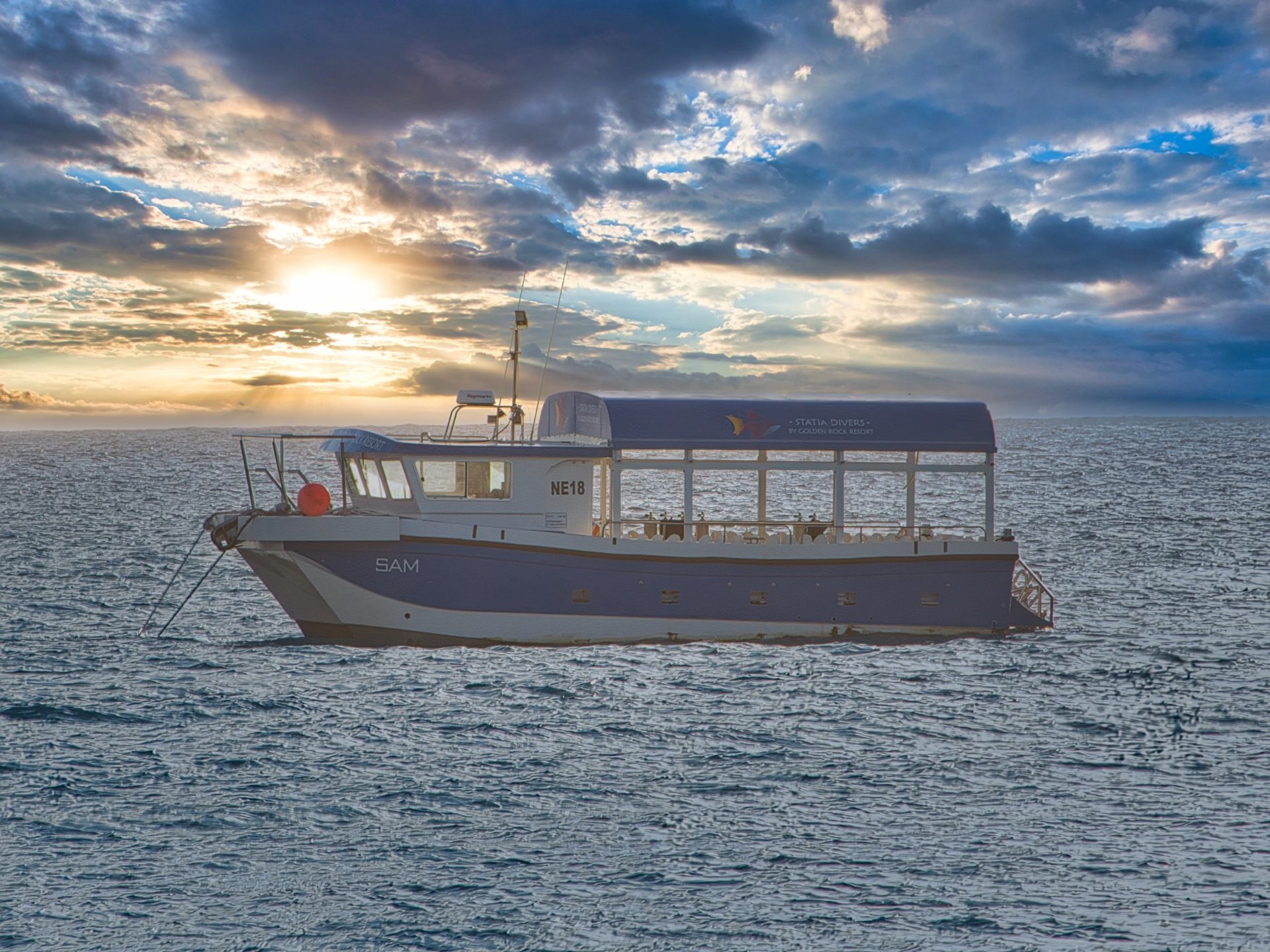
Statia Divers operates as the in-house dive center at Golden Rock, with the shop and classroom located on the resort grounds. The dive boats, however, are docked at the port in Lower Town, about a five-minute shuttle ride from the resort. Each morning, divers assemble at a meeting area near the resort entrance, and the shuttle takes you down to the dock. Your gear will most likely already be loaded on the boat by the time you arrive.
The gear handling was one of the better systems I have experienced. When I first checked in, the team left a storage box in my cottage for my dive gear so they could efficiently transport it each day. From that point on, they moved my gear to and from the boat and rinsed everything after the last dive. As an underwater photographer, I handled my own camera equipment, but the fact that I did not have to deal with hauling dive gear on top of it made a real difference.
Boat briefings and dive briefings are delivered onboard before each dive. The boats I was on were large and spacious, with plenty of room to gear up without bumping into other divers. The rinse bins on the boat were large enough to soak a camera housing, which is a plus for anyone shooting underwater. Over five dive days, I completed 10 dives — typically a two-tank morning session followed by an afternoon dive when available.
The dive shop itself sells most essentials and has a well-equipped classroom. The resort also has an ocean-fed lagoon that Statia Divers uses for training and confined water sessions. Since I was not taking any courses during my stay, I did not spend much time in the shop facilities beyond settling my bill at the end of the week. Statia Divers offers complimentary Nitrox to all EANx-certified divers, which is a welcome perk given the repetitive dive profiles across a full week of diving.
Night dives are available but require enough interested divers to run. During my visit, there were not enough participants to put one together, which was a minor disappointment but understandable on a small island with limited guest numbers.
The overall operation felt professional, well-organized, and attentive without being overbearing. The team clearly knows the dive sites well and runs a tight schedule. For anyone traveling with underwater camera gear, the dive team’s gear handling and rinse setup make Statia Divers a strong choice.
Would I visit again
Yes
Diving & Marine Life
Statia’s diving is built around two main draws: wrecks and reef structure. The island sits within a protected marine park managed by STENAPA, and with only two dive operations sharing the water, you are unlikely to see another group of divers at any site. Every dive I did felt private.
The wreck diving is the headline. Statia has multiple wrecks and wreck-like structures scattered across the sandy bottom, many of them dating back centuries to the island’s days as one of the busiest ports in the Caribbean. The wrecks attract schooling fish, sponges, and encrusting life, and the surrounding seagrass beds add texture to the scenes. One of the more memorable moments was coming across an English Admiralty Longshank anchor — a 19th-century stream anchor sitting upright in the seagrass, encrusted with growth, with divers fanning out around it. It is the kind of subject that reminds you this island has layers of history sitting on the bottom.
The reef diving is different from what you might expect in the Caribbean. Rather than classic coral walls, Statia’s reefs are built on volcanic rock and patch reef formations, with heavy sponge coverage — barrel sponges, tube sponges, and rope sponges are everywhere. Hard and soft coral growth varies by site, but the sponge gardens are the visual signature here. The profiles are generally straightforward, with short boat rides and manageable depths, making Statia accessible to a wide range of experience levels.
For underwater imaging, Statia delivers. The wrecks offer strong wide-angle opportunities — diver-in-environment shots, anchor compositions, and wreck silhouettes against blue water. The reef structure rewards patience with macro and close-focus subjects: cleaner shrimp, crabs, juvenile fish tucked into sponge growth, moray eels under ledges, and the occasional octopus if you are looking in the right places at the right time. Seahorses and other small critters are possible but more of a bonus than a guarantee. Whether you are shooting video or stills, the combination of relaxed dive profiles and uncrowded sites gives you time to work a subject without feeling rushed.
Marine life was consistent across my 10 dives. Southern stingrays were common in the sand around the wreck sites. Sea turtles showed up on multiple dives. Caribbean reef fish were well represented — angelfish, parrotfish, trumpetfish, grunts, snappers, and damselfish were all regular sightings. Barracuda patrolled the wrecks, and lobsters were tucked into crevices on most dives. Spotted eagle rays appear at times, though I would not call them a reliable sighting.
The visibility was typical Caribbean blue water, though conditions varied day to day. On the best days, it was excellent. On others, a slight haze shortened the range but never made the diving feel poor. The water temperature was comfortable throughout.
Statia is quiet, uncrowded, and unhurried — and that is exactly what makes it work. The diving is relaxed, the sites are yours, and the resort gives you a comfortable base without any of the friction that comes with busier islands. I would return.
MONTH VISITED
Quick Facts
- Diving: Boat
- House Reef: No
- Multiple Boats: Yes
- Boat Dock: Off-site (~5 min, resort transfer provided)
- Nitrox: Yes (Complimentary for certified divers)
- Camera Room: No
- Training Pool: Yes
- Eco-friendly Resort
- Restaurant/Bar: Yes
Featured Images


