
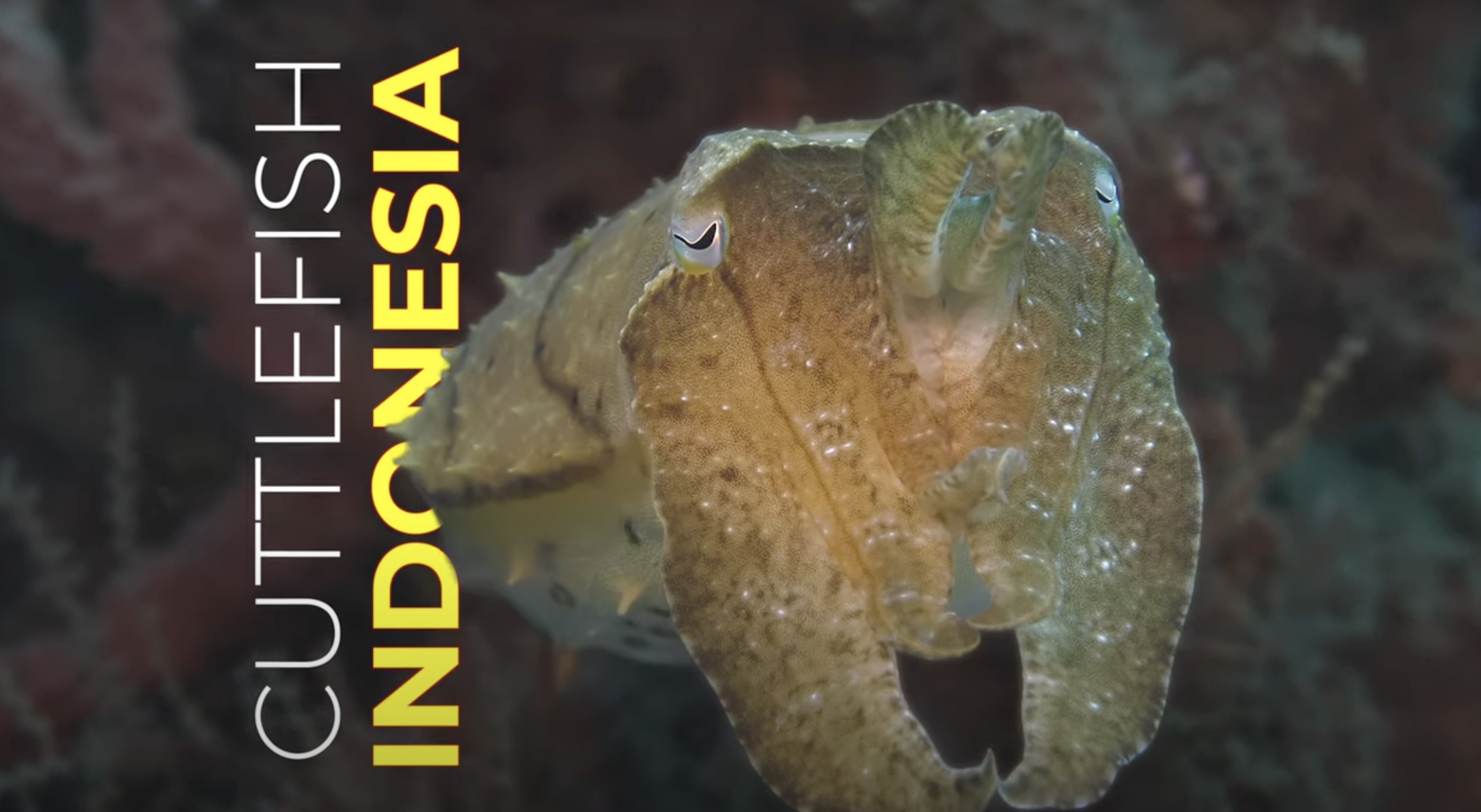
While diving off the coast of Indonesia, I recorded footage of a Pharaoh cuttlefish (Sepia pharaonis) in its natural habitat. This species is commonly found in the Indo-Pacific region and is known for its advanced camouflage abilities and dynamic skin patterning. The individual observed remained stationary for several moments, displaying a range of color changes and subtle body movements.
Pharaoh cuttlefish belong to the cephalopod class, which also includes octopuses and squids. Like others in this group, they possess specialized skin cells. These cells are chromatophores, iridophores, and leucophores. They allow them to change color and texture almost instantly. These changes serve multiple functions, including concealment, signaling to other cuttlefish, and predator deterrence. The footage documents these rapid shifts in pattern and tone. It provides a clear view of how the animal adapts to its environment in real time.
This cuttlefish was observed hovering just above the sandy bottom near a patch of reef structure. It maintained a neutral posture and rotated slowly as it adjusted its appearance. Such behavior is typical of Sepia pharaonis during resting or low-alert states. Capturing this on video leads to a better understanding of cephalopod visual signaling. It also highlights the biological complexity of reef ecosystems in Indonesia.




Leave a Reply to FlowerpoetCancel reply