
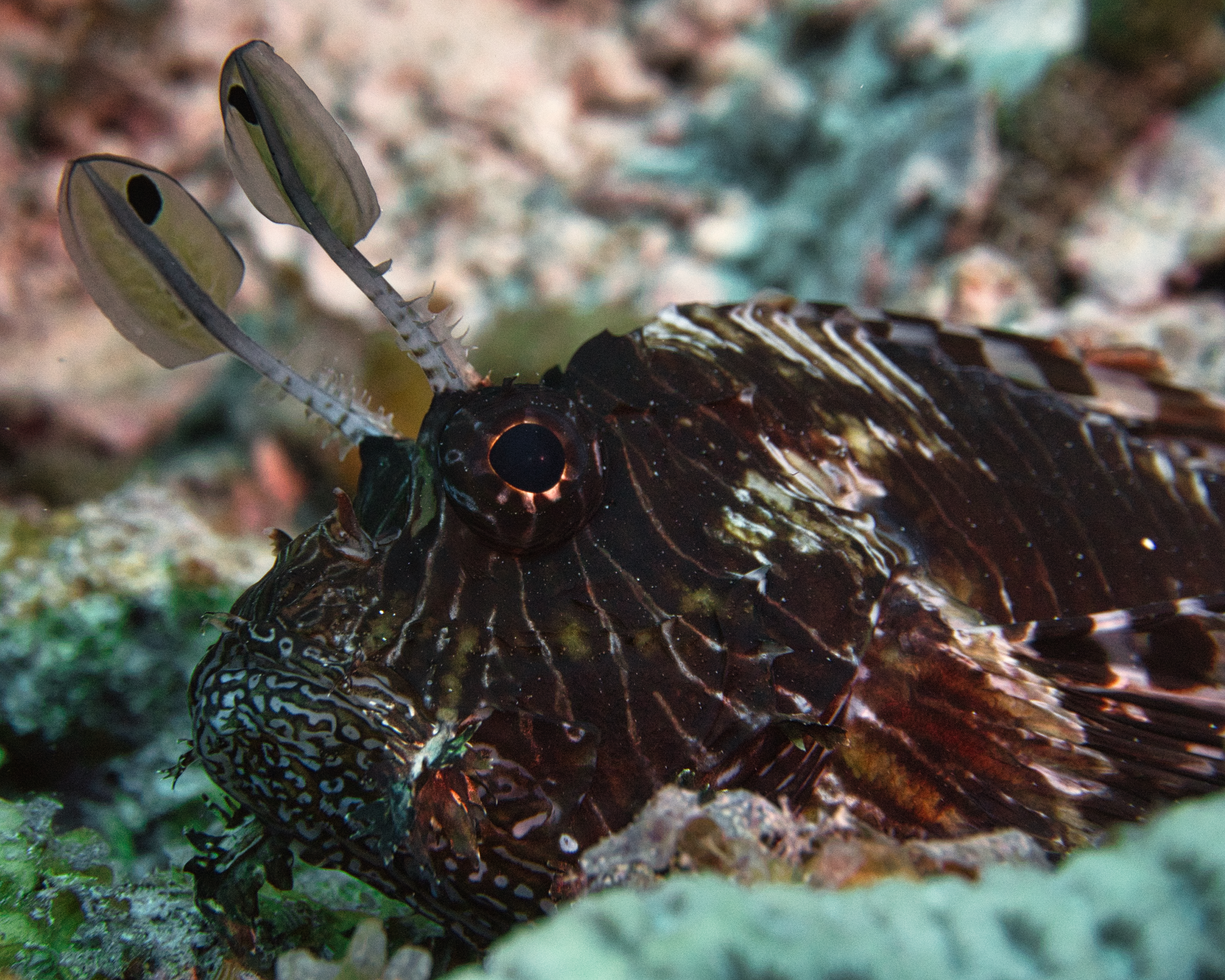

Habitat and Distribution
Lionfish are iconic inhabitants of coral reef ecosystems, where their distinctive striped appearance and flowing fins make them one of the ocean’s most recognizable species. These fascinating fish are widespread throughout the Indo-Pacific region, thriving in tropical and subtropical waters from the Red Sea and East Africa to French Polynesia and the southern coast of Japan.
Hunting Behavior and Diet
As skilled nocturnal predators, lionfish hunt small fish and mobile invertebrates using a unique and highly effective technique. They use their large, fan-like pectoral fins to corner prey against the reef, creating a trap that smaller fish cannot escape. This hunting strategy, combined with their lightning-fast strike speed, makes them formidable predators in their natural habitat.
Venomous Defense System
Lionfish are equipped with venomous spines along their dorsal, pelvic, and anal fins. These spines serve as a powerful defense mechanism against potential predators. While not typically fatal to humans, a lionfish sting can cause extreme pain, swelling, and other symptoms requiring medical attention. Divers and aquarium enthusiasts should always exercise caution around these beautiful but dangerous fish.
Reproduction and Population Growth
The reproductive capacity of lionfish is truly remarkable. Mature lionfish can spawn year-round in tropical waters, giving them a significant advantage over many other reef species with seasonal breeding patterns. A single female lionfish can produce tens of thousands of eggs per spawn, with some estimates suggesting up to 30,000 eggs every few days. This extraordinary reproductive rate is one reason why lionfish populations have exploded in areas where they’ve been introduced outside their native range.
Conservation and Ecological Impact
While lionfish are native to the Indo-Pacific, their introduction to the Atlantic Ocean, Caribbean Sea, and Gulf of Mexico has created significant ecological challenges. Understanding these remarkable predators is crucial for both appreciating their role in native ecosystems and managing their impact as an invasive species in non-native waters.
Quick Facts About Lionfish
- Natural habitat: Coral reefs in the Indo-Pacific
- Diet: Small fish and mobile invertebrates
- Hunting method: Cornering prey with large fins
- Defense: Venomous spines
- Reproduction: Year-round spawning capability
- Egg production: Tens of thousands per spawn
🌿 Join us every Wednesday for Wildlife Wednesday!
Discover amazing creatures from around the world. View all Wildlife Wednesday posts →



Share Your Thoughts Below