
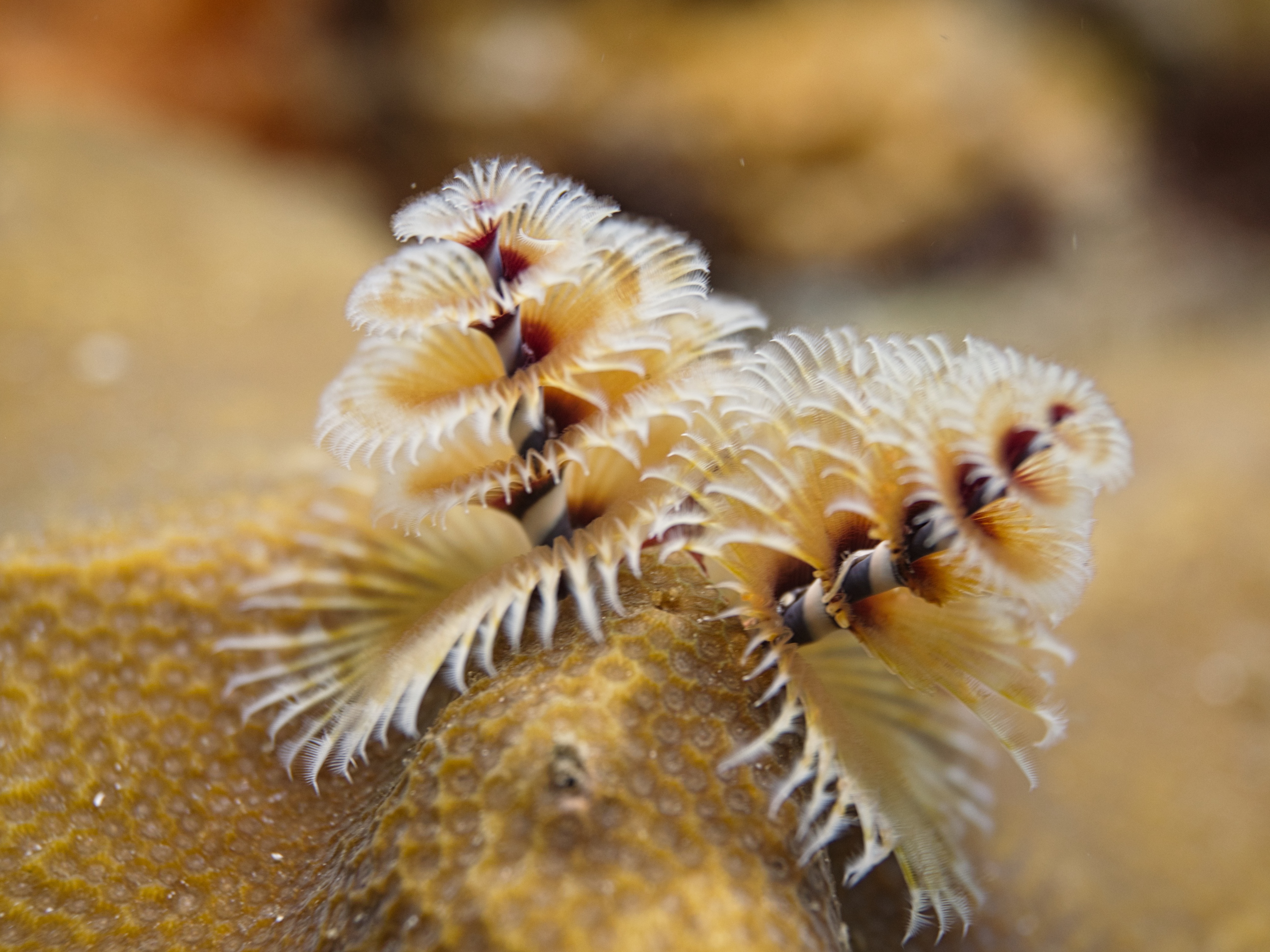
The ocean is full of fascinating creatures, but few are as eye-catching as Christmas tree worms (Spirobranchus giganteus). With their vibrant, spiral-shaped crowns, these small marine worms look like underwater holiday decorations. But beyond their beauty, they play an important role in coral reef ecosystems. Let’s dive into three fascinating facts about these mesmerizing reef dwellers.
Christmas tree worms get their name from their striking, spiraled plumes, which resemble tiny Christmas trees swaying in the ocean. These colorful appendages are actually gills, used for breathing and capturing food. Found in a wide range of colors—blue, red, yellow, orange, and even pink—each worm has two crowns that extend from its burrow, making them a standout sight for divers and snorkelers.

Unlike active hunters, Christmas tree worms are filter feeders. They extend their feathery plumes into the water to trap plankton and organic particles drifting in the current. The captured food is then directed toward the worm’s mouth, allowing it to sustain itself without moving from its burrow. This passive feeding strategy makes them an essential part of the reef’s food web, helping to maintain a balanced ecosystem.

One of the most interesting aspects of Christmas tree worms is their permanent connection to coral. When young, they settle on coral and burrow into it, creating a protective tube where they live for the rest of their lives. If disturbed, the worm quickly retracts into its tube and seals the entrance with a trapdoor-like structure called an operculum, keeping it safe from predators. Because they stay anchored in place, their presence can even influence coral growth patterns over time.
For underwater photographers and marine enthusiasts, Christmas tree worms are a must-see on any reef dive. Their vibrant colors and delicate structures make them a favorite subject, especially when they retract and re-emerge in response to movement. Whether you’re exploring a coral reef in the Caribbean, the Pacific, or the Indian Ocean, keep an eye out for these tiny, living ornaments decorating the underwater world.





Share Your Thoughts Below