
Curaçao · Caribbean · Marine Life

Species Identification
- Common Name
- Longsnout Seahorse
- Scientific Name
- Hippocampus reidi
- Color Morph
- Yellow — a vivid color variant
- Location
- Curaçao, Dutch Caribbean
- Habitat
- Sea fans, seagrass beds, soft corals & coral rubble
- Range
- Western Atlantic — Caribbean, Gulf of Mexico, coastal South America
- Status
- Near Threatened (IUCN Red List)
- Classification
- Order Syngnathiformes — Seahorse
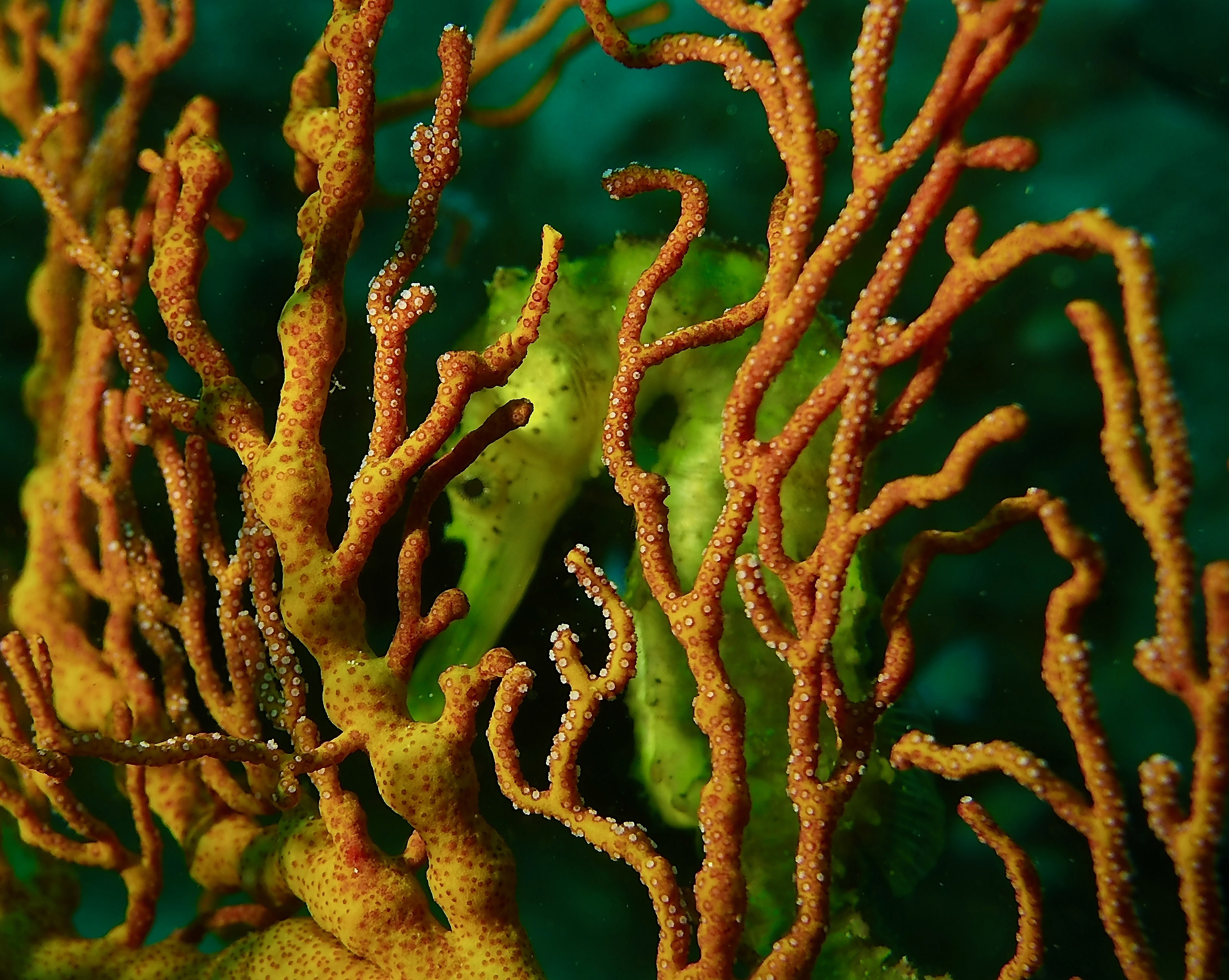
Some reef encounters stop you mid-kick. Drifting over a sandy stretch between coral heads on Curaçao’s west coast, I caught a flash of gold moving through the reef — a yellow seahorse, fully pigmented from snout to tail tip, picking its way across the bottom with that unmistakable upright drift.
The Longsnout Seahorse (Hippocampus reidi) gets its name from its distinctively elongated snout — a precision instrument for suctioning up tiny crustaceans and copepods with a rapid, hydraulic snap. Unlike most fish, seahorses have no stomach; food passes through so quickly that they must eat almost constantly. That elongated snout is the tool that makes this relentless feeding possible, allowing them to strike at prey too small for most predators to notice.
Built to Navigate
Seahorses look like they shouldn’t be able to move at all — and in one sense, they barely do. A small dorsal fin beating up to 35 times per second provides forward motion; paired pectoral fins near the head handle steering. The prehensile tail is what makes the difference: wrapped around a sea fan or coral branch, it anchors the animal against the current; released, it becomes a rudder. Watching one work its way across a reef is watching a creature that has made peace with moving slowly, and made that slowness work for it.
Color in seahorses is both camouflage and circumstance. H. reidi can match cream sponges, brown coral rubble, or orange sea fans with impressive precision — yellow is one of several documented color variants for the species. Curaçao’s sandy slopes and seagrass patches between the walls are where encounters like this happen. Most divers are already kicking toward the drop-off. Slow down in the shallows, and the reef reveals an entirely different community.
Curaçao is justifiably famous for its walls. But the marine life tucked into the shallows above those dramatic drop-offs is every bit as rewarding. If you’re diving here and you haven’t spent time at 10–20 feet just watching the reef move, put it on the list.




Share Your Thoughts Below