
Logistics & Nearby Stay
Dive Brockville Adventure Centre is the go-to dive shop for exploring the historic shipwrecks of the St. Lawrence River from the Canadian side. For divers traveling from the New York City area, driving is the most efficient and practical method to reach the region, typically involving a 6.5-hour trip via the I-81 corridor. This trip was organized by the Big Apple Divers, one of the largest dive clubs in New York. Because the operation’s charters frequently cross the international border mid-river to access both U.S. and Canadian wreck sites, carrying a valid passport or enhanced driver’s license is a non-negotiable requirement for every diver.
The center operates out of a strategic headquarters at 12 Water Street East in Brockville, but the actual dive departures are split between two primary locations to minimize transit times. Most local charters launch from the St. Lawrence Park dock in Brockville, while wrecks located further upriver often require staging out of Rockport. The operation also maintains a boat out of Picton for accessing Lake Ontario wrecks in the Prince Edward County area, though we did not dive from that location on this trip. This logistical flexibility allows for more time on the wrecks and less time fighting the river’s powerful current.
For accommodations, the Comfort Inn Brockville is highly recommended due to its proximity to both the dive shop and the harbor docks. When booking, specifically request a room on the first floor. Most of these ground-level rooms provide direct access to the parking lot, allowing you to load and unload heavy gear crates and tanks directly from your vehicle into your room. Snagging a parking spot near your door effectively eliminates the need to haul wet gear through the hotel lobby or navigate elevators after a long day of diving.
Location
Dive Brockville Adventure Centre
Brockville (1000 Islands / St. Lawrence River)
Dive Shop
Canada (Atlantic)How I Got Here
Share This Review
Dive Operation & Boat Setup
Dive Brockville Adventure Centre and its charter arm, Abucs scubA Charters, operate as one tightly coordinated dive operation. That integration shows up immediately in the logistics: the retail shop doubles as the central staging point for the charter fleet, making tank fills, gear prep, and boat departures feel organized and efficient.
The shop also has a serious gas-blending setup, capable of supporting everything from hyper-clean air to custom Trimix blends for technical divers. For visiting divers, the workflow is simple: drop your tanks at the end of the dive day and pick up fresh fills the next morning, without losing time between charters. If you prefer even more convenience, the shop offers tank drop-off and pick-up directly at the boat for a small additional fee — well worth it if you want to skip the extra trip and keep your mornings streamlined. This is a significant logistical win for those diving multiple days on the St. Lawrence.
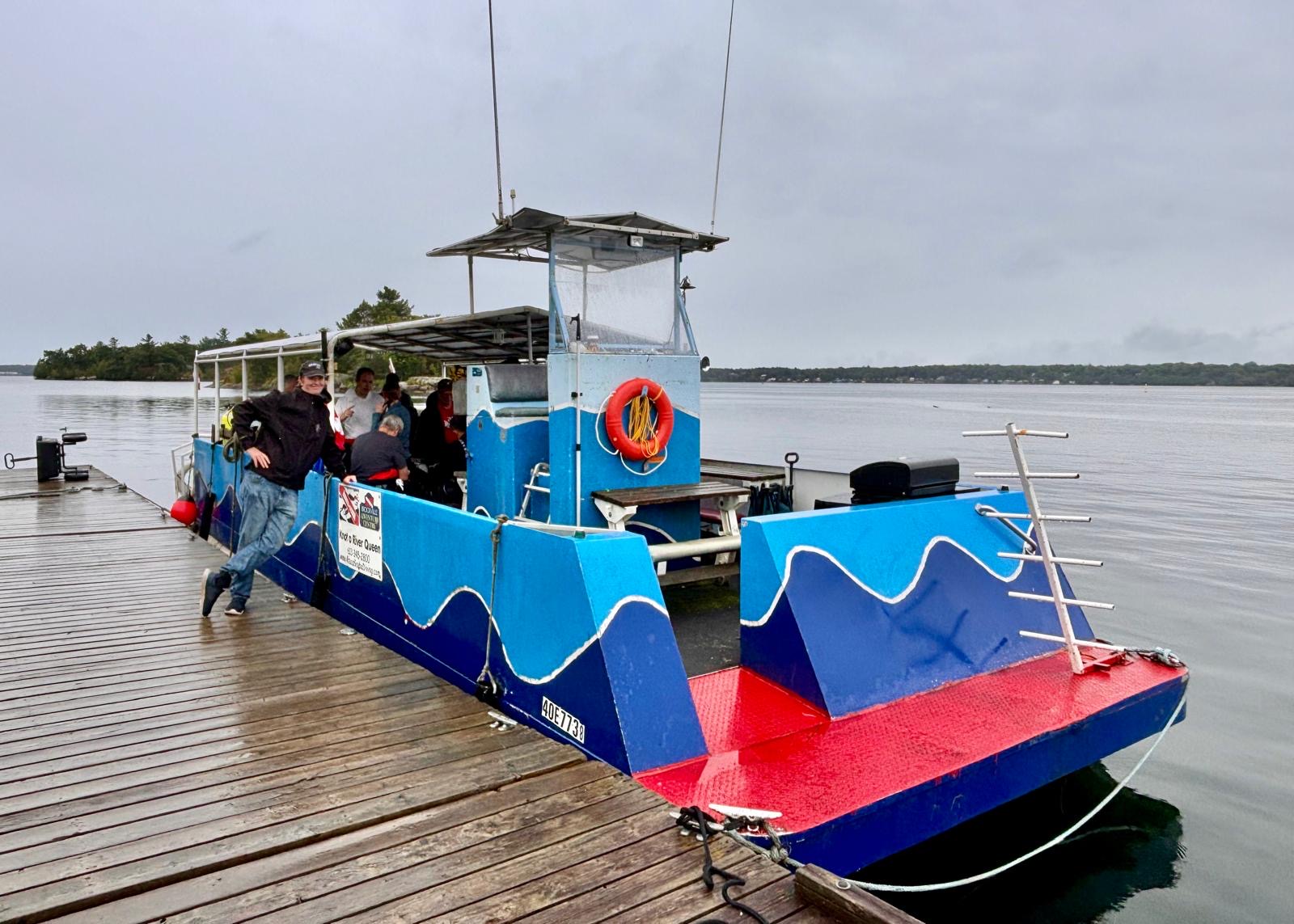
The fleet includes five vessels built around the demands of river diving. We dived off The Knot and the Emily C during our trip. One especially useful feature across the fleet is the Christmas tree-style ladder system, which lets divers climb back aboard while keeping their fins on. That matters when you are wearing doubles, carrying heavier gear, or timing an exit in the river’s constant current.
On 4-tank dive days, the operation also includes a BBQ lunch with chips and soda or water — a small but memorable perk, especially for Northeast wreck diving where lunch is rarely provided. Overall, the crew runs a practical, safety-minded operation suited to the realities of diving in an active international shipping lane.
Would I visit again
Yes
Diving & Marine Life
The Thousand Islands region of the St. Lawrence River offers a freshwater diving environment that is structurally unique in North America. Unlike the Great Lakes, where a sharp thermocline often drops water temperatures to near-freezing at depth, the powerful current here ensures a well-mixed water column. This lack of a significant thermocline means that the temperature at 100 feet is typically within a few degrees of the surface, which drastically improves diver comfort and extends camera battery life. Visibility is remarkably consistent, often exceeding 50 feet, thanks to the filtering effect of invasive zebra mussels, which have paradoxically helped preserve the historical integrity of the sites.
The Keystorm remains the standout wreck of the region. Sunk in 1912, this 256-foot steel freighter lies on its starboard side against a steep underwater slope. Its bow sits in just 25 feet of water, offering excellent ambient light for wide-angle photography, while the stern and massive propellers descend to 115 feet. The open cargo holds provide expansive swim-throughs that are ideal for practicing buoyancy control without the overhead silting risks common in smaller vessels. For those seeking a more technical challenge, The America — an inverted steel drill barge located directly within the international shipping channel — requires a “no-choice” ascent protocol. Divers must follow a mooring line to the river bottom and stay low to avoid the massive freighters passing overhead.
Marine life in the St. Lawrence is surprisingly diverse, though often overshadowed by the wrecks. Divers regularly encounter large freshwater species such as Northern Pike, Smallmouth Bass, and the occasional American Eel weaving through the wooden ribs of older schooners. The cold, oxygen-rich water acts as a high-fidelity time capsule; wooden vessels from the 18th and 19th centuries remain structurally sound, allowing for a level of historical interaction that saltwater environments cannot sustain. For photographers, the green-tinted water provides a high-contrast backdrop for the white anemones that carpet the river’s dramatic granite cliffs.
MONTH VISITED
Quick Facts
- Diving: Boat
- Multiple Boats: Yes
- Dive Style: Freshwater shipwrecks
- Air Fills: Yes
- Departures: Dockside
- Head: Yes
- Galley/Snacks: Yes
- Lodging Included: No (nearby hotels)
- On-site Facility: Yes
Featured Images


