
Resort & Accommodation
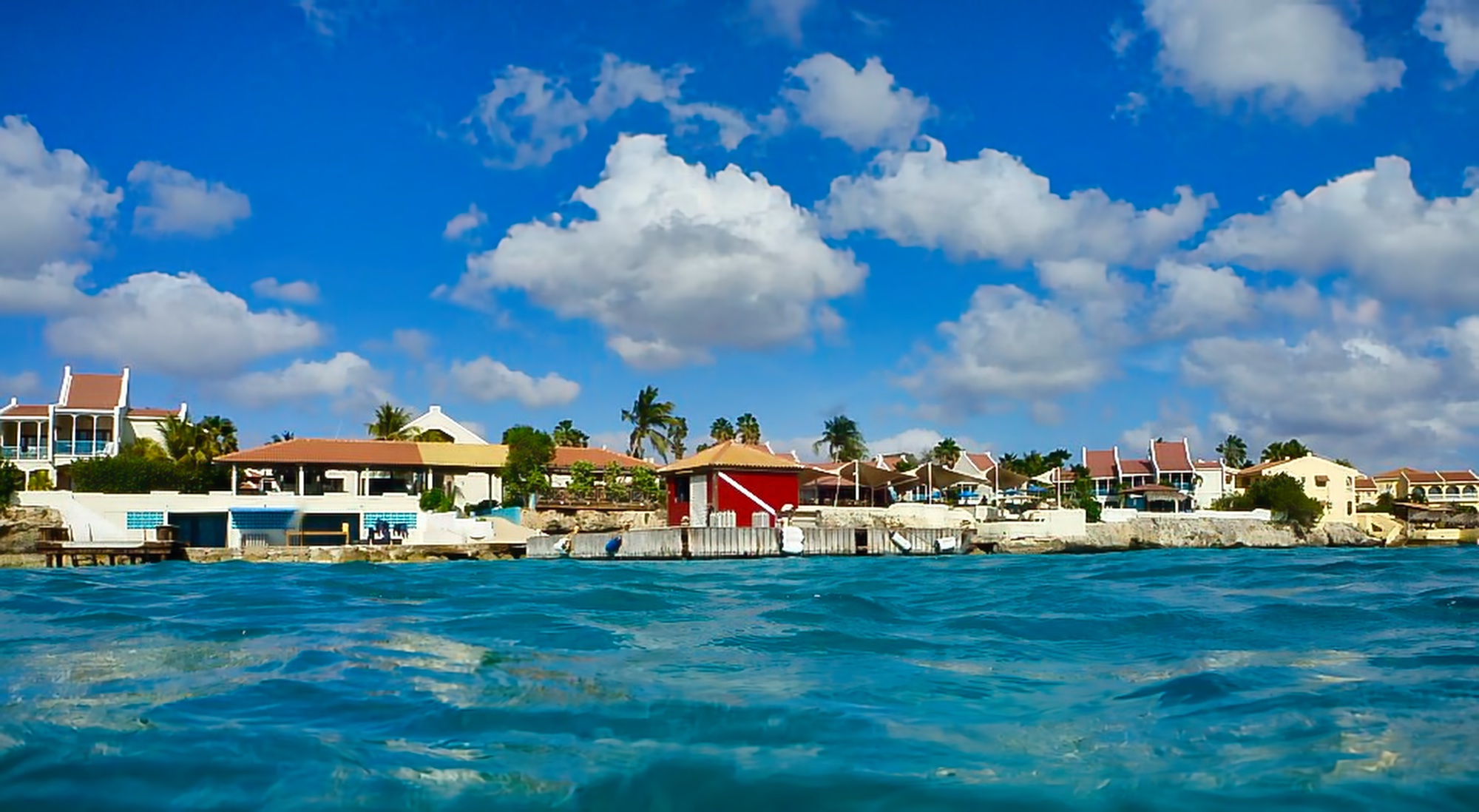
Captain Don’s Habitat is one of the original dive resorts on Bonaire, founded in 1976 by underwater environmentalist Captain Don Stewart. The resort sits directly on the ocean in Kralendijk, well positioned to explore the island’s dive sites by shore or by boat. Captain Don’s is a dive resort built by a diver, and that identity comes through in everything from the layout to the culture.
Bonaire is located in the southwestern Caribbean, close to Venezuela, and is part of the ABC islands along with Aruba and Curaçao. The ABCs are part of the Kingdom of the Netherlands. Aruba and Curaçao are autonomous, self-governing constituent countries, while Bonaire is a special municipality. Direct flights are available into Flamingo International Airport (BON), and the resort is about a 10-minute drive from the airport.
I have stayed at Captain Don’s twice. On my first visit, I was in a Deluxe room, and on the second, a Deluxe Junior Suite. Both rooms were well-suited for a working diver. The Deluxe had great ocean views from a private balcony and featured the amenities a modern traveler should expect: air conditioning, desk, cable TV with a US/Miami feed, refrigerator, coffee maker, hair dryer, and a laptop safe. The Junior Suite offered more space but the same practical setup. Both rooms were comfortable, clean, and designed with divers in mind — a place to rest, rinse, and recharge between dives.
The property has two pools, a house reef accessible directly from the dock, and two dive operations on site — a general dive shop for recreational divers and a separate tech-focused shop for technical diving. The resort’s restaurant, Rum Runners, served good food and drinks across both visits. The bar area is a natural gathering spot after diving, with a relaxed atmosphere that complements the property’s overall vibe.
How I Got Here
✈️ BON → MIA → JFK
Share This Review
Dive Operation & Facilities
Captain Don’s operates under the philosophy of “Diving Freedom” — and that is not just a tagline. Shore diving is available 24 hours a day, 365 days a year. You grab a tank, walk to the divers-only platform, and go. No sign-up sheet, no waiting for a group. It is as close to self-service diving as you will find at a resort.
I opted for the two-tank boat dive and unlimited shore dive package, which is the way to get the most out of Bonaire. The boat operation runs single-tank dives at 8:30 AM, 11:00 AM, and 2:00 PM, typically heading to sites off Klein Bonaire or other locations not accessible from shore. In the afternoons and evenings, I mostly shore dived at various points around the island, including night dives on my most recent stay.
The resort has a dedicated locker area near the dive platform. The lockers are large enough to store an extra tank and your gear, but bring your own lock to secure them. One tip — the lockers are not a great place to dry a wetsuit overnight. If you want it dry for the next morning, bring it back to your room and hang it on your balcony.
Tanks are available around the dive shop area and the process is simple — grab a tank or two, load them in your truck, and drive to whichever shore dive site you want. Nitrox was available and I used it on every trip. The dive sites are marked by numbered yellow stones along the road, and hotels and rental operators provide free maps with site locations, so navigating is straightforward. I highly recommend renting a small pickup truck if you plan to shore dive. Renting is simple at the airport or through most hotels, and you do not need an international driver’s license.
It is worth noting that diving at Captain Don’s is self-service. Guides do not wash your gear or load trucks for you. If you are coming from a resort where valet dive service is the norm, this is a different experience. But for independent divers who prefer to set their own schedule and dive at their own pace, the freedom is hard to beat.
How many trips here
2
Repeat Visit Notes
Bonaire's protected marine park, Captain Don's house reef, and unlimited shore diving made the first trip easy to repeat — add sites like 1000 Steps and Salt Pier, and there was more than enough reason to come back.
Diving & Marine Life
Bonaire sits outside the hurricane belt, making scuba diving possible year round. Ocean temperatures range from 78°F to 86°F depending on the season, and average air temperature hovers around 82°F. Conditions are generally calm with little to no current on many sites, particularly on the south side of the island. The northern waters can be rougher, and a guide is recommended there.
The island’s entire coastline is protected within the Bonaire National Marine Park, established in 1979 and extending to a depth of 200 feet. Through public-private partnerships and strong local awareness, the reefs and ecosystem are highly protected — and it shows. Bonaire hosts some of the highest density of marine life in the Caribbean, and each time I visit, I see something I have never observed before underwater.
The reef system is easy to navigate from shore, and dive guides are not really needed on the south side. Reefs are accessible, profiles are manageable, and it is genuinely hard to get lost underwater. Whether you are learning to dive for the first time or continuing your education, Bonaire is an excellent place for training and certification.
One of the most famous sites is the Salt Pier, accessible by both boat and shore. I prefer the shore entry because you see more marine life as you dive underneath the pier and during your safety stop — a boat dive forces you to do your stop in open blue water. 1000 Steps is another standout, offering a dramatic entry and healthy reef structure below.
Marine life across my dives included seahorses, spotted eagle rays, tarpon, and dense schools of reef fish. The house reef at Captain Don’s alone delivered consistent sightings on every visit. The variety and density of life on Bonaire’s reefs is a direct result of decades of marine park protection, and it makes a noticeable difference compared to less regulated destinations.
Visibility was typical Caribbean blue water — excellent on most days, with occasional variation. For underwater imaging, the combination of calm conditions, easy access, unlimited dive time, and healthy reefs gives you the freedom to work a subject without pressure. Whether you are shooting wide angle on the wrecks and pier pilings or hunting macro subjects in the shallows, Bonaire rewards patience and repeat dives.
MONTHS VISITED
August
September
Quick Facts
- Diving: Boat & Shore
- House Reef: Yes
- Multiple Boats: Yes
- Nitrox: Yes
- Dive Lockers: Yes
- Training Pool: Yes
- Restaurant/Bar: Yes
Featured Images


