
Liveaboard & Accommodation
Getting to the Atlantis Azores Liveaboard from New York started with a JFK departure, followed by a connection through a major international hub and arrival at Manila’s Ninoy Aquino International Airport. On this trip, I connected through Hong Kong (HKG), though Middle East hubs are also common depending on the airline. From Manila, the final leg is a short domestic flight to Dumaguete–Sibulan Airport (DGT) on Negros Oriental.
If an overnight in Manila is required, the Belmont Hotel is one of the more convenient options. It sits within the NAIA complex and connects directly to Terminal 3 via the Runway Manila sky bridge, which makes an early domestic departure much easier if your flight leaves from T3. From Dumaguete, Atlantis handles the ground transfer to the resort.
I booked a combined resort and liveaboard package with Atlantis Dive Resorts and Liveaboards, spending the first week at the Atlantis Dumaguete Resort in Dauin before boarding the Azores for the Visayas dive route. The two operations run as a single itinerary.
On departure day, Atlantis transferred our dry luggage from the resort directly to the Azores while we completed one final dive from the resort boat. Instead of returning to shore after the dive, the tender dropped us directly at the liveaboard. By the time we boarded, our luggage was already onboard and the transition from resort to vessel felt seamless.
One small administrative note: bar tabs are settled at the resort before the transition and opened fresh aboard the Azores. It is not an inconvenience, just something to know before you board. By the time we climbed out of the water and stepped onto the Azores, our bags were already there and dive deck stations had been assigned. There is no checkout stress and no gap between operations — just a clean handoff from one Atlantis property to the next. If your schedule allows, the combined package is the right way to do this trip.
How I Got Here
🏨 Layover in Manila
✈️ MNL → DGT
Share This Review
Dive Operation & Facilities
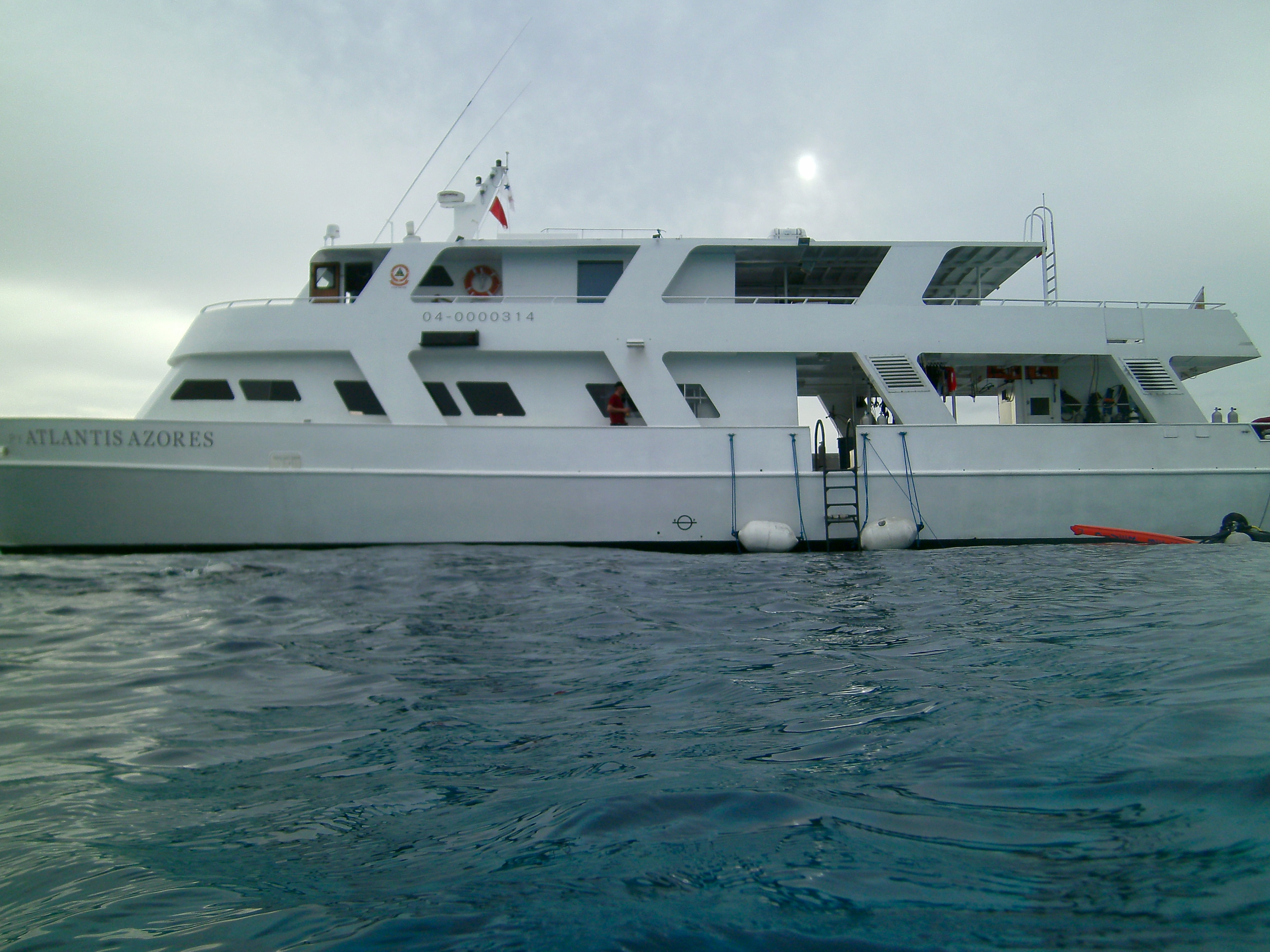
The Atlantis Azores is a 107-foot aluminum monohull built to carry 16 divers across three functional decks, each designed to keep specific activities separated and the overall flow of guests and crew moving cleanly. The boat is dive-centric in its layout — public space is prioritized, and it shows.
The dive deck is the operational center of the daily schedule. Each of the 16 divers is assigned a personal station with a dedicated storage bin and tank rack, and the deck is sized to allow everyone to gear up simultaneously without congestion. The camera station is a three-tier carpeted table equipped with freshwater rinse tanks designated for camera equipment only — no wetsuits, no fins, no sand — and compressed air guns positioned around the table for drying housings before opening. In a high-humidity tropical environment, that detail matters. Most dives are conducted from two zodiac tenders, which allows the Azores to anchor or moor while the tenders drop divers precisely on the reef crest or wall — including within the protected marine park sites on the itinerary. The crew is practiced at handing cameras down to divers and assisting with heavy gear in current, which is a genuine operational benefit when currents are running.
The main deck houses the salon and dining area. The salon doubles as a post-dive production room — a 40-inch monitor is used for daily marine life presentations and image review sessions, giving photographers a chance to evaluate footage and adjust settings before the next dive. Dining runs family-style across the full group of 16, which keeps the social energy of the charter intact throughout the week.
The upper deck is where the boat slows down between dives. A partially shaded sun deck with chaise lounges, a wet bar, and a hot tub positioned to take in the Philippine seascape make it a functional off-gassing zone as much as a relaxation space. For cinematographers, it also provides a clean elevated vantage point for topside B-roll during transits through the Visayas.
Cabins are located below deck across seven deluxe staterooms. I stayed in a deluxe stateroom, which comes with an ensuite head, hot shower, and individual air conditioning — the A/C works well and matters in the tropics. The cabins are tight. Workable for a solo diver, genuinely cramped for two sharing the space with a week’s worth of gear. It is worth factoring into your booking decision if cabin comfort is a priority.
The standard daily schedule runs five dives including a night dive. I completed every dive on the charter, diving Nitrox throughout, which made the five-dive rhythm manageable without compressing no-decompression limits. Briefings are detailed, the crew is efficient on the water, and the tender system keeps surface intervals short and site access precise.
Would I visit again
Yes
Diving & Marine Life
The Visayas Safari covers a diverse cross-section of Philippine marine ecology across six days, moving between high-energy walls, protected marine sanctuaries, and dedicated macro sites. Over the course of the charter I completed approximately 25 dives, and the range of what the itinerary puts in front of you is genuinely difficult to summarize in a single lens choice.
The wide-angle highlight of the week was Balicasag Island, which is widely regarded as the standout site on this itinerary — and it earned that reputation on every dive. Deep vertical walls drop into blue water, and the fish life above them is exceptional. Dense, swirling schools of bigeye jacks move in formation across the reef in numbers that fill the frame regardless of focal length. It is the kind of site that rewards patience.
The other wide-angle moment came before boarding the Azores. The itinerary includes a morning at Oslob, where snorkeling with whale sharks is the designated activity — diving is not permitted at this site. Whatever your position on the feeding debate, the encounter itself is visually overwhelming. Whale sharks in shallow, clear water at close range is not something you walk away from easily, and for video it is some of the most accessible large-animal footage you will find anywhere in the region.
Beyond those two experiences, the Visayas Safari is fundamentally a macro itinerary, and the reefs deliver at a level that will keep a diopter-equipped photographer busy across every dive. The species variety is exceptional — flatworms, nudibranchs, ribbon eels, pipefish, ghost pipefish, sea kraits, flamboyant cuttlefish, porcelain crabs, harlequin shrimp, and peacock mantis shrimp all made appearances. Frogfish were present in multiple sizes and color variations across different sites. Seahorses were abundant — and notably diverse, with multiple color morphs encountered throughout the week, which is not something you see on every Indo-Pacific itinerary.
For camera setup, I would recommend a zoom lens over a fixed prime if you are planning to shoot both the Balicasag walls and the macro sites — the range of subject sizes across this itinerary makes versatility more valuable than optimizing for one end of the spectrum. That said, if you have to choose, the macro opportunities here outweigh the wide-angle ones across the full week.
MONTH VISITED
Quick Facts
- Diving: Tenders
- Multiple Tenders: Yes
- Camera Table: Yes
- Nitrox: Yes
- Hot Tub: Yes
- Sun Deck: Yes
Featured Images


